
What to Do in Pu Luong | Quiet Experiences Beyond the Highlights
The best things to do in Pu Luong include trekking through rice terraces, visiting Thai villages like Don Village and Kho Muong Village, seeing bamboo water wheels, relaxing at Hieu Waterfall, and staying in quiet eco lodges.
Unlike more developed destinations in northern Vietnam, Pu Luong is not about sightseeing. It is about moving slowly through villages, nature, and daily life.
Pu Luong is often described as peaceful, untouched, or off the beaten path.
But those words alone do not fully explain what you actually do when you arrive here.
Pu Luong is not a place of landmarks or famous viewpoints.
There are no busy town centers, no nightlife, and very few places designed purely for photos.
What Pu Luong offers instead is time — time to walk, observe, listen, and move slowly through a living landscape.
If you are wondering what to do in Pu Luong, the answer is not a checklist of attractions, but a series of quiet, meaningful experiences.
Among all things to do, trekking offers the most authentic experience.
👉 Read real traveler experiences here.
If you are looking for the best pu luong trekking experience, this region offers untouched trails and authentic villages.
For travelers who want a full experience, check out these private trekking tours in pu luong designed by local experts.
A popular option is the 3 day trekking in pu luong, which balances adventure and cultural immersion.
What to Do in Pu Luong – Quick Overview
- Walk through rice terraces and mountain villages
- Trek with local guides on quiet routes
- Visit bamboo water wheels along the streams
- Relax at Hieu Waterfall in Ban Hieu Village
- Explore Kho Muong Village and its cave
- Stay in a traditional stilt house or eco lodge
- Enjoy simple local food with families
- Spend time without rushing or fixed plans.
One of the best ways to experience these activities is through guided journeys. You can explore Pu Luong trekking packages to plan your trip.
Walk Through Traditional Thai and Muong Villages
One of the most meaningful things to do in Pu Luong is simply walking.
Village paths connect rice terraces, bamboo forests, and wooden houses on stilts. Life here follows agricultural rhythms rather than tourism schedules.
You may see:
-
Farmers working by hand in the fields
-
Buffalo resting beside streams
-
Children walking home from school
-
Smoke rising from kitchen fires in the late afternoon
These are not performances or staged activities.
They are daily life — and walking slowly is the best way to experience it.
You can explore more about these communities in our guide to Pu Luong villages.
For travelers who prefer depth over speed, this kind of village walk often becomes the highlight of the entire journey.
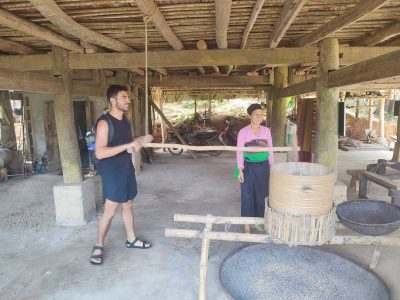
Village life in Pu Luong follows agricultural rhythms rather than tourism schedules.
Explore Rice Terraces and Seasonal Landscapes
Pu Luong’s rice terraces change dramatically throughout the year.
Depending on the season, you may experience:
-
Fresh green fields in early planting season
-
Golden terraces before harvest
-
Quiet, empty fields during resting periods.
Rice terraces, hidden villages, waterfalls, and peaceful trekking routes make Pu Luong one of the best slow travel destinations in Vietnam.
Unlike more famous terrace destinations, Pu Luong remains calm even during peak seasons. Walking through these landscapes is not about reaching a viewpoint, but about being inside the scenery.
Short walks between villages often pass through terraces, streams, and shaded forest paths — making the landscape part of daily movement rather than a separate attraction.
Some visitors prefer a gentle day experience that introduces village life without rushing.
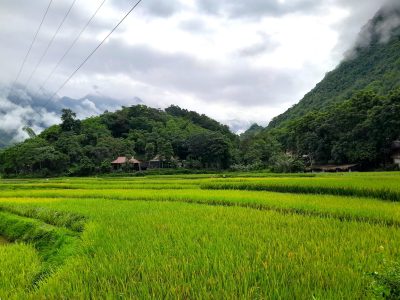
Rice terraces in Pu Luong change beautifully with the seasons.
Discover Bamboo Water Wheels in Their Natural Setting
Bamboo water wheels are one of Pu Luong’s most recognizable features — but their meaning is often misunderstood.
These structures are not decorative landmarks.
They are part of a traditional irrigation system that has supported agriculture for generations.
The best way to experience them is not as a photo stop, but as part of a gentle walk along streams and fields, where you can observe how water is guided into farmland.
Here, the water wheels exist because they are needed, not because visitors come.
If you prefer a more peaceful and deeper perspective, explore these quiet things to do in Pu Luong.
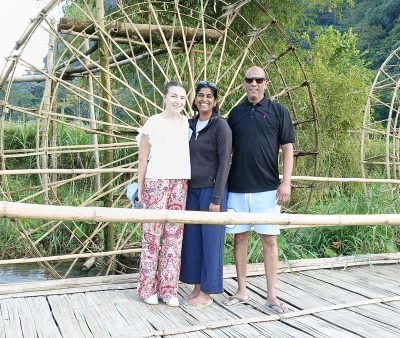
Bamboo water wheels are part of daily agricultural life in Pu Luong.
Gentle Trekking Through Forest and Countryside
Trekking in Pu Luong does not mean extreme hiking or long-distance climbs.
Most routes are:
-
Gentle to moderate
-
Well-known to local guides
-
Connected directly to villages and farmland
Walking through forest paths, bamboo groves, and hillside trails offers a quiet sense of movement without physical pressure.
This kind of trekking suits travelers who enjoy:
-
Nature without crowds
-
Walking as a way of understanding a place
-
Conversations with local guides rather than rushing between stops
For those interested in deeper exploration, longer walking journeys can unfold naturally over several days.
For a deeper experience, many travelers choose Pu Luong trekking tours designed around village routes and local knowledge.
One of the most authentic experiences is trekking with local guides in Pu Luong.
Experience Local Food in Simple Village Settings
Food in Pu Luong is not about restaurants or menus.
Meals are typically:
-
Home-cooked
-
Seasonal
-
Based on local ingredients
You may eat in a family home or a small village kitchen, where dishes reflect what is available rather than what is fashionable.
Sharing meals in these settings offers a quiet but powerful connection to local life — one that feels personal rather than commercial.
Visiting local villages is one of the best things to do. Learn more in our Pu Luong villages guide.
Stay in Eco Lodges or Traditional Stilt Houses
Accommodation is part of the experience in Pu Luong.
Most places to stay are:
-
Eco lodges built with natural materials
-
Traditional stilt houses adapted for guests
-
Small-scale and family-run
Staying overnight in the countryside allows you to experience:
-
Early morning mist over the valleys
-
Evening quiet after sunset
-
The rhythm of village life beyond daytime visits
Choosing where to stay often shapes how deeply you connect with the region.
Choosing the right place to stay is important — see our Pu Luong accommodation guide.
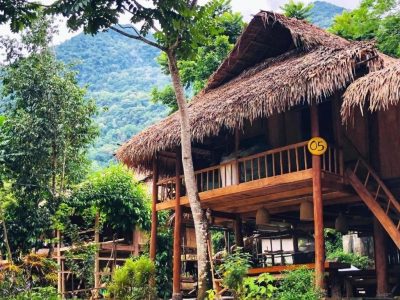
Staying overnight allows travelers to experience Pu Luong beyond daytime visits.
Choose Experiences That Match Your Travel Style
Pu Luong is not for travelers seeking busy itineraries or constant entertainment.
It is best suited for those who:
-
Prefer slow travel
-
Enjoy walking and observation
-
Value quiet landscapes over famous sights
-
Want authentic contact rather than curated performances
If this resonates with you, Pu Luong offers space to slow down — and to travel differently.
For travelers interested in deeper exploration, you may consider curated journeys in Pu Luong that focus on private walks, local guidance, and unhurried pacing.
Some visitors choose a gentle day experience to explore nearby villages, while others prefer a slow trekking journey in Pu Luong that unfolds over several days.
If you prefer a more peaceful and deeper perspective, explore these quiet things to do in Pu Luong.
Is Pu Luong Right for You?
Pu Luong is not about ticking boxes.
It is about:
-
Walking rather than rushing
-
Listening rather than collecting photos
-
Experiencing daily life rather than highlights
If that sounds like your way of traveling, Pu Luong may offer something quietly memorable — not because of what you “see,” but because of how you move through it.
Planning Your Time in Pu Luong
Most travelers spend between one and three days here, depending on how deeply they wish to explore.
A slower pace often reveals more than a longer list of activities.
Planning a trip to Pu Luong often raises simple but important questions.
The answers below address what most travelers want to know before deciding how much time to spend, how to explore, and whether Pu Luong truly matches their travel style:
Q1. What is the best way to explore Pu Luong?
The best way to explore Pu Luong is on foot. Gentle walking through villages, rice terraces, and forest paths allows you to experience daily life, landscapes, and local culture at a natural pace.
Q2. Is Pu Luong suitable for travelers who don’t like crowds?
Yes. Pu Luong is ideal for travelers who prefer quiet destinations, slow travel, and authentic local experiences rather than busy tourist centers or nightlife.
Q3. How many days should I spend in Pu Luong?
Most travelers spend 1–3 days in Pu Luong. One day offers a gentle introduction, while two to three days allow for deeper village walks and countryside exploration.
Q4. Do I need a guide to explore Pu Luong?
A local guide is recommended for deeper exploration. Guides help navigate village paths, explain daily life, and create meaningful connections that are difficult to experience independently.
Q5. Is trekking in Pu Luong difficult?
Trekking in Pu Luong is generally gentle to moderate. Routes focus more on walking through nature and villages than on physical challenge or long-distance hiking.
Q6. What kind of accommodation can I expect in Pu Luong?
Accommodation typically includes eco lodges and traditional stilt houses. These stays are simple, comfortable, and closely connected to the surrounding landscape and village life.
What are the best things to do in Pu Luong?
The best things to do include trekking through rice terraces, visiting villages, seeing bamboo water wheels, and relaxing in nature.
Is Pu Luong worth visiting?
Yes, especially for travelers who prefer quiet nature, authentic villages, and slow travel experiences.
Pu Luong Trekking – Local Travel Experts
Authentic local insights into Pu Luong Nature Reserve, including trekking routes, village experiences, and slow travel journeys in northern Vietnam.
Based on real local experience from guiding travelers in Pu Luong and continuously updated to reflect actual trekking conditions, village life, and seasonal changes in Pu Luong.