
Pu Luong or Cao Bang? Which Destination Is Better for Trekking in Vietnam?
Pu Luong or Cao Bang? Best Trekking Destination in Vietnam for Nature & Slow Travel
If you are planning a trekking trip in northern Vietnam, you may wonder: Pu Luong or Cao Bang — which destination is better?
Both are beautiful, less touristy alternatives to Sapa and Ha Giang. But they offer very different experiences.
- Pu Luong is ideal for slow travel, rice terrace trekking, authentic village life, and peaceful nature near Hanoi.
- Cao Bang is better for epic mountain scenery, waterfalls, road trips, and remote adventure.
The best choice depends on your travel style, fitness level, transport preference, and how deeply you want to experience local culture.
Quick Comparison: Pu Luong vs Cao Bang
| Category | Pu Luong | Cao Bang |
|---|---|---|
| Best for | Slow trekking & village life | Adventure & road trips |
| Distance from Hanoi | ~4.5 hours | ~7–8 hours |
| Trekking Style | Rice terraces, villages, jungle | Mountains, valleys, waterfalls |
| Tourism Level | Quiet but accessible | Very remote |
| Landscape | Soft green valleys | Dramatic limestone mountains |
| Best Transport | Private car or limousine | Motorbike or long road trip |
| Ideal Trip Length | 2–4 days | 4–7 days |
| Local Culture | Thai ethnic villages | Tay, Nung ethnic culture |
| Comfort Level | Easier & more comfortable | More adventurous |
| Best Season | May–June & Sept–Oct | Sept–Nov |
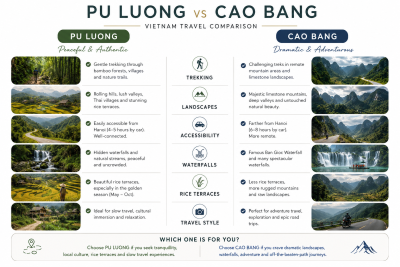
A visual comparison between Pu Luong and Cao Bang including trekking, landscapes, accessibility, and travel style.
Why Many Travelers Choose Pu Luong
1. Easier Access from Hanoi
One of the biggest advantages of Pu Luong is convenience.
You can leave Hanoi in the morning and start trekking by lunchtime. This makes it perfect for travelers with limited time.
Cao Bang requires a much longer journey, often involving:
- Overnight buses
- Long motorbike routes
- Multiple transfers
For many international travelers, Pu Luong feels more relaxing and efficient.
If you are looking for an easy trekking escape from Hanoi, check:
“Trekking Near Hanoi: Why Pu Luong Is the Best Choice”.
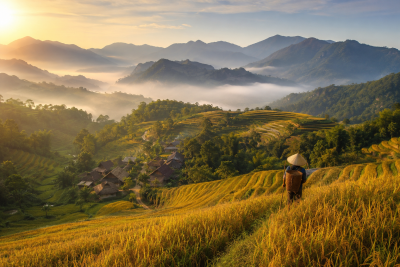
Golden rice terraces in Pu Luong create one of the most peaceful trekking landscapes in northern Vietnam.
2. Better for Slow Travel
Pu Luong is one of the best slow travel destinations in Vietnam.
Instead of rushing between viewpoints, travelers spend time:
- Walking through rice terraces
- Crossing bamboo bridges
- Visiting remote Thai villages
- Eating with local families
- Sleeping in traditional stilt houses
The atmosphere feels calm, human, and deeply authentic.
Many travelers searching for “real Vietnam” prefer Pu Luong because it still feels peaceful and untouched.
You can explore:
“Slow Travel Vietnam: Why Pu Luong Is Perfect for Conscious Travelers”.

Local village life is one of the highlights of traveling in Pu Luong.
3. Trekking Is More Accessible
Pu Luong trekking is suitable for:
- Beginners
- Couples
- Families
- Travelers over 50
- Photographers
- Slow travelers
The trails are diverse but generally softer than Cao Bang.
Typical Pu Luong treks include:
- Rice terrace walks
- Village-to-village trekking
- Jungle paths
- Water wheels and streams
- Scenic valley viewpoints
Explore detailed trekking routes here:
“Pu Luong Trekking Routes & Trails”
And detailed maps here:
“Pu Luong Trekking Map”.
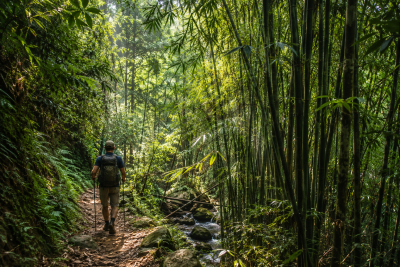
Jungle trekking in Pu Luong combines bamboo forests, hidden trails, and peaceful mountain scenery.
Why Travelers Love Cao Bang
1. More Dramatic Landscapes
Cao Bang is visually spectacular.
The region is famous for:
- Limestone mountains
- Deep valleys
- Giant waterfalls
- Remote mountain passes
- Wild scenery
Ban Gioc Waterfall is one of the most impressive waterfalls in Southeast Asia.
Compared to Pu Luong:
- Cao Bang feels wilder
- More cinematic
- Less developed
Adventure travelers often love the feeling of remoteness.
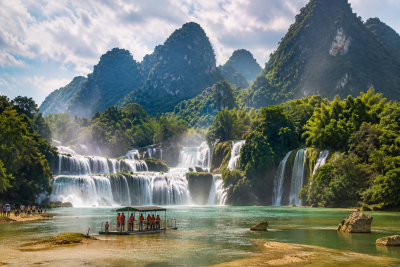
Cao Bang offers some of the most dramatic mountain landscapes in Vietnam.
2. Better for Long Road Trips
Cao Bang works especially well for:
- Motorbike expeditions
- Backpackers
- Photography trips
- Multi-day northern Vietnam loops
Many travelers combine:
- Ha Giang
- Ba Be Lake
- Cao Bang
This creates an epic mountain journey across northern Vietnam.
But it requires more time and energy than Pu Luong.
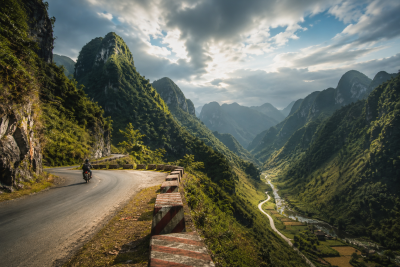
Cao Bang is famous for dramatic mountain roads and remote adventure landscapes.
3. Fewer Tourists
Although tourism is growing, Cao Bang still receives fewer international visitors than many destinations in Vietnam.
Some areas feel extremely remote.
This appeals to travelers searching for:
- Off-the-beaten-path Vietnam
- Hidden mountain landscapes
- Authentic local encounters
However, infrastructure can also be more limited.
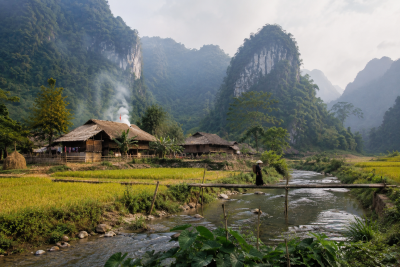
Remote villages in Cao Bang offer authentic cultural experiences far from mass tourism.
Trekking Experience: Pu Luong vs Cao Bang
Pu Luong Trekking Experience
Pu Luong trekking focuses on:
- Walking rhythm
- Village interaction
- Nature immersion
- Rice terrace scenery
- Relaxed exploration
The experience feels intimate and grounded.
Travelers often say:
“Pu Luong feels peaceful rather than extreme.”
Popular itineraries include:
- 2-day trekking
- 3-day trekking
- 4-day trekking journeys
Explore:
Cao Bang Trekking Experience
Cao Bang trekking is more rugged.
The focus is often:
- Big landscapes
- Remote roads
- Long travel distances
- Waterfalls and mountain scenery
Treks can involve:
- Steeper terrain
- Longer transfers
- Less tourist infrastructure
It feels more adventurous — but also more demanding.
Which Destination Is Better for Photography?
Choose Pu Luong if You Love:
- Rice terraces
- Golden harvest season
- Village life
- Morning mist
- Human connection
- Slow travel atmosphere.
Choose Cao Bang if You Love:
- Epic mountains
- Waterfalls
- Drone photography
- Road-trip scenery
- Dramatic landscapes
Both destinations are beautiful, but visually very different.
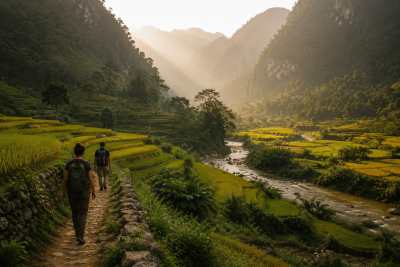
Northern Vietnam offers some of the most authentic trekking experiences in Southeast Asia.
Best Time to Visit
Best Time for Pu Luong
- Late May to June
- September to October
These are the green and golden rice seasons.
More details:
“Best Time to Visit Pu Luong”.
Best Time for Cao Bang
- September to November
This period offers:
- Cooler weather
- Clear mountain views
- Beautiful rice fields
- Strong waterfall flow.
Accommodation Comparison
Pu Luong
Accommodation is generally:
- More comfortable
- Easier to access
- Better suited for eco-luxury travelers
Options include:
- Eco lodges
- Boutique retreats
- Traditional stilt houses.
Cao Bang
Accommodation is:
- More basic
- More local
- More remote
Ideal for:
- Backpackers
- Adventure travelers
- Explorers.
Who Should Choose Pu Luong?
Pu Luong is best for travelers who want:
- Private trekking tours
- Authentic village experiences
- Rice terrace scenery
- Comfortable eco lodges
- Slow travel
- Easy access from Hanoi
- Quiet nature without mass tourism
Who Should Choose Cao Bang?
Cao Bang is better for travelers who want:
- Epic mountain landscapes
- Waterfalls and road trips
- Remote adventures
- Motorbike exploration
- Rugged northern Vietnam.
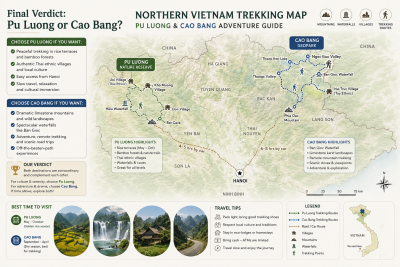

Pu Luong and Cao Bang are two of the best trekking destinations in northern Vietnam.
Final Verdict: Pu Luong or Cao Bang?
Choose Pu Luong if you want:
- Peaceful trekking
- Cultural immersion
- Rice terraces
- Slow travel
- Comfort and authenticity combined
Choose Cao Bang if you want:
- Wild adventure
- Dramatic mountain scenery
- Waterfalls
- Long northern Vietnam road trips
For many travelers visiting Vietnam for the first time, Pu Luong offers the perfect balance between:
- Authentic culture
- Beautiful trekking
- Accessibility
- Comfort
- Quiet landscapes
If you want a calm, immersive trekking experience without the crowds, Pu Luong is often the better choice.
Start planning here:
Pu Luong Trekking – Local Travel Experts
Authentic local insights into Pu Luong Nature Reserve, including trekking routes, village experiences, and slow travel journeys in northern Vietnam.
Based on real local experience from guiding travelers in Pu Luong and continuously updated to reflect actual trekking conditions, village life, and seasonal changes in Pu Luong.