
Private Pu Luong Trekking Tours – Flexible & Local Guided Experiences
Private Pu Luong Trekking Tours
Private Pu Luong trekking tours are designed for travelers who want a flexible and personalized journey rather than a fixed group itinerary.
Instead of following a schedule, your experience is built around your pace, your interests, and your comfort level — guided by a local expert who adjusts each step of the journey.
This is not a standard trekking tour. It is a private experience designed specifically for you.
Pu Luong is also a beautiful choice for couples looking for a private trekking experience in Vietnam, especially for honeymoon-style trips, romantic nature escapes and peaceful slow travel away from crowded tourist routes.
If you are new to the region, you may want to start with our complete Pu Luong trekking guide to understand the landscapes, villages, and walking routes.
You can start with a 2-day Pu Luong trekking experience from Hanoi.
How Private Trekking in Pu Luong Really Feels
Private trekking in Pu Luong feels completely different from standard group tours.
There is no fixed pace, no waiting for others, and no pressure to follow a schedule. You walk when you want, stop when you want, and experience the landscape at your own rhythm. For travelers seeking a quieter and more meaningful journey, slow travel experiences in Pu Luong offer a peaceful alternative to crowded tourist destinations.
Your guide focuses entirely on your journey — adjusting routes, sharing local insights, and helping you connect with village life in a more natural way.
This is what makes private trekking in Pu Luong truly special. These private tours focus on authentic village experiences. Learn more in our Pu Luong villages guide.
→ Start your journey directly with a private transfer and trekking tour from Ninh Binh.
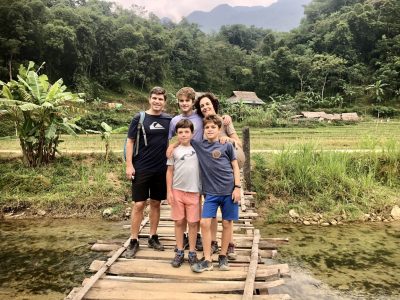
Walking with a local guide through quiet village paths
Why Choose Private Pu Luong Trekking Tours?
Private trekking is not just about comfort — it is about having full control over your journey.
These journeys are designed for travelers looking for authentic village trekking in Vietnam, with local guides, quiet trails, and real village life.
Unlike group tours, private trekking allows you to:
• Walk at your own pace without time pressure
• Choose routes that match your fitness and interests
• Travel with a dedicated local guide focused only on you
• Avoid crowded trails and tourist groups
• Experience village life in a more personal and uninterrupted way
For travelers who value flexibility and authenticity, private trekking offers a completely different level of experience.
Our private trekking tours can go beyond the standard routes and include hidden trails in Pu Luong known mostly by local guides.
For travelers seeking a deeper connection, private trekking transforms the journey from sightseeing into a lived experience. If you are new to the region, you may want to start with our complete
Pu Luong trekking guide to understand the landscapes, villages, and walking routes.
For travelers searching for quiet destinations in Vietnam, private trekking experiences in Pu Luong offer a more authentic alternative to crowded tourist routes.
What Makes Pu Luong Ideal for Private Trekking?
Pu Luong is especially suited for private trekking because of its quiet landscape and village-based trail system.
Instead of crowded viewpoints, routes here connect small villages, rice terraces, and forest paths — making it ideal for a slower, more personal walking experience.
For experienced trekkers, we can design a private route through remote villages and off-the-beaten-path trekking trails in Pu Luong.
This environment allows private travelers to explore naturally, without the structure and pace of group tours.
👉 You may also want to explore our Pu Luong trekking packages to compare available options and durations.
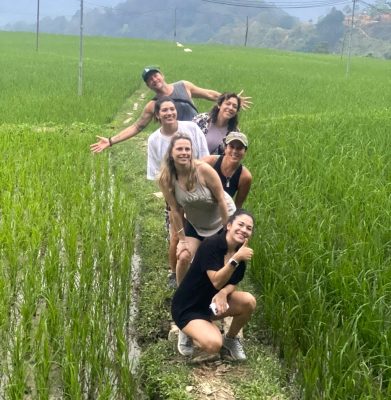
Terraced rice fields along trekking routes in Pu Luong
Sustainable Eco Trekking in Pu Luong
Unlike mass tourism destinations, Pu Luong offers a rare opportunity to experience Vietnam in a more conscious and responsible way. Our sustainable eco trekking journeys are designed for travelers who value authenticity, cultural respect, and environmental care.
We focus on slow walking experiences, avoiding crowded routes and minimizing environmental impact. Trails are carefully selected through remote villages, rice terraces, and forest paths, where you can connect deeply with nature without disturbing it.
By traveling with local guides and staying in small-scale homestays, your journey directly supports ethnic Thai communities. Every step you take contributes to preserving local traditions and protecting the natural beauty of Pu Luong for future generations.
This is not just a trek — it’s a mindful way of traveling.
Is This Pu Luong Trekking Tour Suitable for Couples?
Yes. This Pu Luong trekking tour is a great choice for couples who enjoy nature, quiet trails and authentic local experiences. The itinerary can be adjusted for a romantic, comfortable pace, with time for rice terrace views, village walks, photography stops and peaceful evenings in the mountains.
Couples can choose a softer trekking style with shorter walking distances, or a more adventurous route through bamboo forests and remote valleys. Because the tour is fully private, there is no need to follow a group schedule. This makes the experience especially suitable for couples, honeymoon travelers and guests looking for a peaceful escape from Hanoi.
For the best balance, many couples prefer a 3-day or 4-day Pu Luong trekking itinerary with private transfers, a local guide, authentic meals and one or two nights in a scenic eco lodge or comfortable local accommodation.
If you are planning a honeymoon, anniversary trip or peaceful nature escape, a longer itinerary such as our Pu Luong trekking 3 days tour offers a better balance of trekking, village life and relaxation.
Private Trekking Routes (2–5 Days)
Unlike rough backpacking routes in Ha Giang, many travelers prefer the comfort and flexibility of private trekking experiences in Pu Luong compared to Ha Giang.
Private trekking tours can be designed based on your available time and preferred walking style.
Below are common durations to help you plan your journey:
2-Day Private Trekking
-
Light trekking through valleys and nearby villages
-
Ideal for first-time visitors
-
Overnight in a traditional village
→ Explore Pu Luong trekking 2 days
3-Day Private Trekking (Most Recommended)
-
Balanced trekking experience
-
Rice terraces, bamboo forests, waterwheel areas
-
Deeper village connection
→ Explore Pu Luong trekking 3 days
4-Day Private Trekking
-
Slower pace with longer routes
-
Remote villages and quiet valleys
-
More time for cultural immersion
→ Explore Pu Luong trekking 4 days
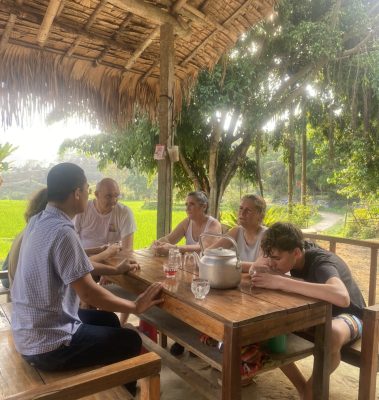
Overnight stay in local village house
5-Day Private Trekking (Full Experience)
-
Deep exploration of less-visited areas
-
Hidden valleys and extended trekking routes
-
Complete slow travel experience
→ Explore Pu Luong trekking 5 days
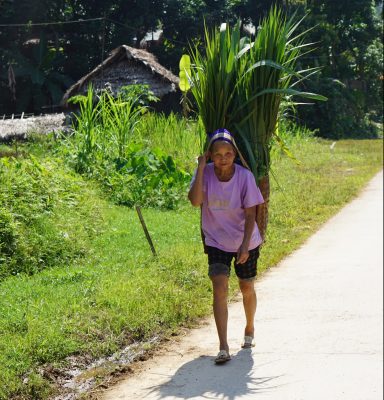
Exploring traditional Thai villages during trekking
Private vs Group Trekking Tours
The difference is not just in comfort — it is in the entire experience.
Private trekking:
-
Flexible itinerary
-
Personal guide
-
Quiet and immersive
-
Designed around you
Group trekking:
-
Fixed schedule
-
Shared experience
-
Faster pace
-
Limited flexibility
For travelers who value flexibility, privacy, and deeper experiences, private trekking is clearly the better choice.
If you are new to the region, start with our complete Pu Luong trekking guide to understand routes, villages, and travel style.
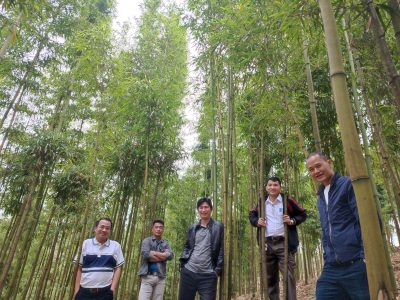
Walking through bamboo forests in Pu Luong
Our Private Trekking Philosophy
Our private trekking approach is built around one idea:
A journey that adapts to you — not the other way around.
This means no fixed schedules, no rushed stops, and no unnecessary structure.
Instead, you experience Pu Luong in a way that feels natural, personal, and unforced.
Our private tours include transportation, but you can also read this guide on how to reach Pu Luong to better understand the journey and travel time.
Who Is This Experience For?
Vietnam offers diverse trekking landscapes ranging from rice terraces to remote mountain passes. This detailed Vietnam trekking destinations guide helps travelers compare the country’s best hiking regions.
Private Pu Luong trekking tours are best suited for:
-
Couples seeking a quiet and meaningful trip
-
Solo travelers wanting a guided but flexible journey
-
Families who prefer comfort and personalization
-
Travelers who value culture over checklist tourism
If you prefer a structured group itinerary, this may not be the right experience.
Pu Luong Trekking for Couples
Pu Luong is one of the most peaceful trekking destinations in Vietnam for couples who want more than a standard sightseeing trip. Instead of crowded viewpoints, busy group tours or rushed itineraries, a private Pu Luong trekking experience gives couples quiet trails, rice terraces, local villages, bamboo forests and time to enjoy the journey at their own pace.
This is especially suitable for couples looking for a romantic nature escape, honeymoon-style soft adventure, or a slow travel experience in northern Vietnam. The routes can be designed to feel intimate and comfortable, with flexible walking distances, scenic breaks, local meals and private transfers from Hanoi, Ninh Binh or Mai Chau.
For couples, the biggest advantage of trekking in Pu Luong is privacy. You do not need to follow a fixed group schedule. Your local guide can adjust the route depending on your energy, weather, photography stops and preferred level of adventure. Some couples prefer gentle walks through rice terraces and villages, while others may enjoy longer trails through bamboo forests and remote valleys.
A private Pu Luong trekking tour can also combine authentic village life with a more comfortable stay, such as an eco lodge or boutique retreat overlooking the mountains. This creates a balanced experience: adventurous enough to feel meaningful, but still peaceful, romantic and comfortable.
Pu Luong is not a luxury destination in the conventional sense. Its beauty comes from silence, nature, local culture and space. For couples who value authenticity over crowds, it can be one of the most memorable places to experience rural Vietnam together.
Travelers who choose Pu Luong over busier destinations often compare it with other regions. You can read more in our Pu Luong vs Mai Chau trekking comparison.
But if you are looking for something slower, deeper, and more personal — this is exactly what Pu Luong offers. All these routes take place inside Pu Luong Nature Reserve, where trekking is shaped by nature, local culture, and traditional village life.
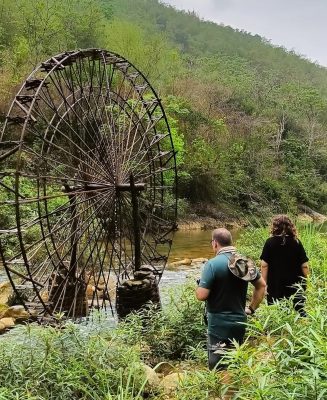
Traditional waterwheels along trekking routes.
Plan Your Private Pu Luong Trekking Tour
Every private trekking tour can be customized based on:
• Number of days
• Walking distance and difficulty
• Accommodation preference
• Travel pace
• Personal interests
To explore structured options, you can view our Pu Luong trekking packages or contact us directly for a custom itinerary.
For travelers from the U.S. looking for a more relaxed and culturally immersive journey, we recommend this private trekking experience tailored for American travelers.
Frequently Asked Questions About Private Pu Luong Trekking Tours
1. Are private Pu Luong trekking tours worth it?
Yes, private Pu Luong trekking tours offer a much more flexible and personal experience compared to group tours. You can walk at your own pace, choose your preferred routes, and enjoy deeper interaction with local villages without feeling rushed.
2. How many days do I need for a private trekking tour in Pu Luong?
Most travelers choose between 2 to 4 days. A 3-day itinerary is the most balanced option, while 4–5 days allow deeper exploration of remote villages and quieter trekking routes.
3. What is the difference between private and group trekking tours?
Private trekking tours are customized to your pace and interests, with a personal guide and flexible schedule. Group tours follow fixed itineraries, shared pacing, and less personalized experiences.
4. Is Pu Luong suitable for beginner trekkers?
Yes. Many trekking routes in Pu Luong are moderate and can be adjusted for beginners. Private tours allow you to shorten distances and walk at a comfortable pace.
5. What kind of accommodation is included in private trekking tours?
Most private tours include stays in traditional Thai village houses or boutique eco-lodges. Accommodation can be adjusted depending on your comfort preference.
6. When is the best time for private trekking in Pu Luong?
The best time is from March to May and September to November. During these months, the weather is pleasant and the rice terraces are at their most beautiful.
7. Can I customize my private trekking itinerary?
Yes. All private Pu Luong trekking tours can be fully customized based on your travel style, number of days, walking distance, and accommodation preference.
These experiences are built from our Pu Luong trekking routes.
To compare all options, see our Pu Luong trekking packages.
8. Is Pu Luong good for couples?
Yes. Pu Luong is ideal for couples who want a peaceful nature escape, quiet trekking trails, rice terraces, local villages and a more authentic experience than crowded tourist destinations.
9. Is Pu Luong suitable for a honeymoon trip?
Pu Luong can be a beautiful honeymoon-style destination for couples who enjoy nature, privacy and slow travel. It is best for couples who prefer authentic village life, mountain views and private trekking rather than luxury resort nightlife.
10. Can the trekking route be adjusted for couples?
Yes. Private Pu Luong trekking routes can be adjusted based on walking ability, weather, photography stops and preferred comfort level.
11. What is the best Pu Luong itinerary for couples?
A 3-day or 4-day private Pu Luong trekking itinerary is usually best for couples because it allows enough time for trekking, relaxation, local culture and scenic accommodation.
12. Is Pu Luong better than Sapa for couples?
Pu Luong is better for couples who prefer quiet trails, fewer tourists and a peaceful rural atmosphere. Sapa may be better for couples who want more restaurants, nightlife and a busier mountain town.
Start Your Journey
Start Your Private Trekking Journey
Tell us your travel style, number of days, and preferred pace — we will design a private trekking experience tailored specifically for you.
If you’re considering a private journey, you may want to see what past travelers experienced.
👉 Read real experiences from our guests
→ Contact us on WhatsApp to plan your journey
## Explore More About Pu Luong
To plan your journey better, you can explore:
– 👉 Pu Luong trekking routes and complete guide
– 👉 Pu Luong trekking difficulty levels explained
– 👉 Check Pu Luong weather today before your trip
– 👉 Best time to visit Pu Luong by season
– 👉 Things to do in Pu Luong beyond trekking
– 👉 Private Pu Luong trekking tours tailored to you
Pu Luong Trekking – Local Travel Experts
Authentic local insights into Pu Luong Nature Reserve, including trekking routes, village experiences, and slow travel journeys in northern Vietnam.
Based on real local experience from guiding travelers in Pu Luong and continuously updated to reflect actual trekking conditions, village life, and seasonal changes in Pu Luong.