
Things to Do in Pu Luong – A Complete Guide for Slow & Meaningful Travel
- BY: puluong_owner
- |
- Feb 22, 2023
Things to do in Pu Luong focus on slow, meaningful experiences rather than sightseeing. Walking through rice terraces, trekking with local guides, visiting bamboo water wheels, swimming at Hieu Waterfall, and spending time in mountain villages are the most authentic ways to experience Pu Luong Nature Reserve.
Pu Luong is not a destination built for sightseeing.
There are no iconic viewpoints packed with tour buses, no artificial attractions, and no rush to “see everything.”
What Pu Luong offers instead is space — to walk, to observe, and to experience life as it unfolds in mountain villages.
If you are searching for things to do in Pu Luong, this guide is designed for travelers who value authentic experiences over checklists, and depth over speed.
Why Pu Luong Feels Different From Sapa or Ninh Binh
Unlike many popular destinations in northern Vietnam, Pu Luong is not organized around highlights.
Here, activities are not performances created for visitors. They are part of daily life:
Farmers work rice terraces by hand
Bamboo water wheels irrigate fields
Villages function quietly without adapting themselves to tourism
The best things to do in Pu Luong are often not scheduled activities — but ways of moving through the landscape.
1. Walk Through Rice Terraces and Mountain Villages
Walking is the foundation of any meaningful Pu Luong experience.
The landscape is shaped by narrow dirt paths that connect villages, rice fields, streams, and forest edges. These paths are not hiking trails in the conventional sense — they are routes used daily by locals.
Typical walking experiences include:
Passing through terraced rice fields at different elevations
Crossing small streams and bamboo bridges
Entering Thai and Muong villages such as Don, Ban Hieu, Kho Muong
These walks are gentle, unhurried, and deeply immersive. They are best done without rushing and without fixed expectations.
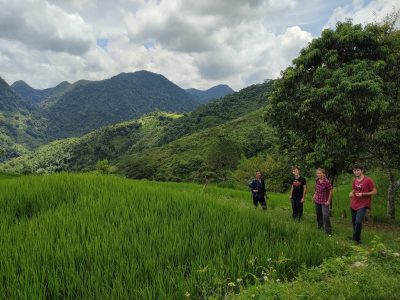
Village paths connect rice fields, streams, and daily life in Pu Luong.
2. Trek With a Local Guide on Quiet Routes
Trekking in Pu Luong is not about reaching summits or chasing viewpoints.
Local guides are usually farmers or villagers who understand:
Seasonal trail conditions
Which paths are safe after rain
How to move respectfully through villages
Trekking with a local guide allows access to:
Remote paths away from day-trip traffic
Forest trails connecting hidden villages
Natural rest points used by locals
Most treks range from moderate to easy in difficulty, but weather and terrain awareness are essential.
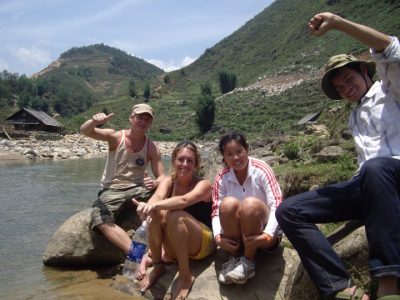
Local guides help travelers access quiet routes and remote villages.
3. Visit Traditional Bamboo Water Wheels
Bamboo water wheels are one of Pu Luong’s most recognizable features.
These structures are part of a traditional irrigation system still used today to bring water from rivers to rice terraces. They are not decorative displays.
The best way to experience them is:
Early morning or late afternoon
Without crowds
By observing quietly rather than approaching as an attraction
Watching the slow, continuous movement of the wheels offers insight into how agriculture has shaped life in the valley for generations.
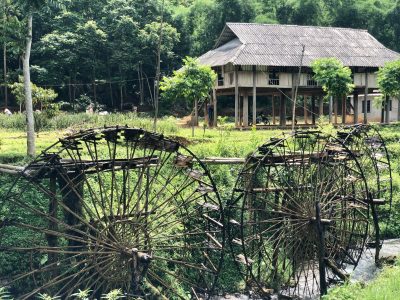
Bamboo water wheels are still used daily for irrigation in Pu Luong.
4. Swim at Hieu Waterfall (When Conditions Are Right)
Hieu Waterfall is one of the few places in Pu Luong where swimming is possible.
The waterfall is fed by mountain streams and is most suitable for visiting during:
Late spring and summer
Periods without heavy rainfall
Water levels and clarity change with the season. During the rainy months, swimming may not be safe.
Rather than a dramatic waterfall, Hieu offers a calm, natural pool environment integrated into village life.
5. Experience Bamboo Rafting on the Cham River
Bamboo rafting is a traditional local activity rather than a commercial adventure.
Rafts are simple structures built from bamboo and used to move along calm sections of the river. This experience is:
Slow-paced
Dependent on water levels
Best combined with village visits
Rafting here is about movement and scenery, not speed or excitement.
6. Explore the Area by Bicycle or Motorbike
For travelers comfortable with rural roads, cycling or motorbiking can be an effective way to explore larger distances.
Road conditions vary:
Some paved mountain roads
Many quiet concrete village roads
Minimal traffic compared to major tourist regions
Motorbikes are best suited for experienced riders, especially during wet conditions. Cycling is ideal for flatter valley routes rather than steep climbs.
7. Spend Time in a Village Without an Agenda
One of the most overlooked things to do in Pu Luong is doing very little.
Spending time in a village might include:
Sitting outside a local home
Watching daily routines unfold
Sharing tea or meals if invited
These moments cannot be planned and should not be rushed. They are the essence of Pu Luong’s appeal.
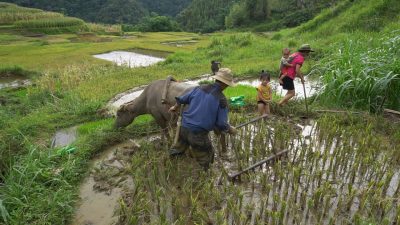
Observing daily life is one of the most authentic things to do in Pu Luong.
8. Stay in a Small Lodge or Village Homestay
Accommodation in Pu Luong is not simply a place to sleep.
Where you stay determines:
Your access to walking paths
Noise levels at night and early morning
Proximity to village life
Small eco lodges and homestays offer a rhythm aligned with daylight, weather, and local routines — an essential part of the experience.
Choosing the right place to stay affects access to walking routes, village life, and overall experience — this Pu Luong accommodation guide helps slow travelers decide where to stay.
9. Eat Local Food Prepared for Daily Life
Meals in Pu Luong are shaped by availability, season, and simplicity.
Typical meals include:
Locally grown vegetables
Simple proteins
Shared dishes eaten communally
Food is not presented as cuisine, but as nourishment. Understanding this context is part of experiencing Pu Luong authentically.
Meals in Pu Luong reflect local rhythm and seasonality — this Pu Luong food guide explains what locals eat and how food fits into daily village life.
10. Choose Fewer Activities and Stay Longer
Many travelers ask how many activities they should plan in Pu Luong.
The better question is how much time they are willing to give.
Two or three unhurried days often provide a richer experience than a packed itinerary. Pu Luong rewards patience, not efficiency.
Who Pu Luong Is Best Suited For
Pu Luong is ideal for travelers who:
Enjoy walking and nature
Prefer quiet environments
Value authenticity over convenience
Pu Luong may not suit travelers who:
Seek nightlife or shopping
Prefer fast-paced itineraries
Expect constant entertainment
Final Thoughts: What to Do in Pu Luong Is Mostly About How You Travel
The most meaningful things to do in Pu Luong are not attractions.
They are moments created by:
Moving slowly
Paying attention
Allowing space for unplanned experiences
Pu Luong is not a place to conquer or consume — it is a place to enter quietly.