
Less Touristy Places in Vietnam: Hidden Destinations Beyond the Crowds
Less Touristy Places in Vietnam: Where to Escape the Crowds and Experience the Real Vietnam
There was a time when places like Sapa, Ha Long Bay, and Hoi An still felt quiet.
Travelers came to Vietnam searching for rice terraces hidden in mountain valleys, fishing villages untouched by mass tourism, and long days spent walking through landscapes that still felt deeply connected to local life.
That Vietnam still exists.
But today, finding it takes a little more effort.
Over the last decade, many of Vietnam’s most famous destinations have changed rapidly. Mountain towns once known for peaceful trekking now receive endless streams of buses and group tours. Beach towns continue to grow with resorts, nightlife, and large developments. Even some national parks can feel crowded during peak season.
Yet beyond the famous itineraries, another side of Vietnam remains surprisingly untouched.
A quieter Vietnam.
A Vietnam of bamboo forests, hidden rice terraces, remote waterfalls, jungle valleys, limestone mountains, small fishing towns, and villages where life still follows the rhythm of farming seasons rather than tourism.
For travelers searching for authenticity, slow travel, and meaningful experiences beyond the crowds, these less touristy places in Vietnam offer something increasingly rare in Southeast Asia:
space, silence, and a deeper connection to the country itself.
Unlike crowded trekking destinations, a family friendly Pu Luong tour offers a quieter and more authentic mountain experience for families visiting Northern Vietnam.
Many of Vietnam’s quieter destinations are also becoming important examples of ethical trekking and low-impact travel, particularly for travelers seeking authentic cultural experiences instead of mass tourism.
Travellers searching for quieter destinations often become interested in responsible travel in Vietnam and community-based tourism experiences beyond mass tourism.
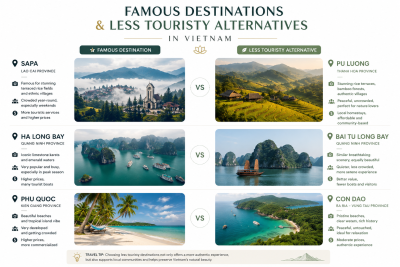
Some of Vietnam’s quieter destinations offer the same beauty with far fewer crowds.
Quick Answer: What Are the Best Less Touristy Places in Vietnam?
Some of the best less touristy places in Vietnam include:
- Pù Luông
- Cao Bang
- Ba Be Lake
- Bai Tu Long Bay
- Kon Tum
- Con Dao
- Bach Ma National Park
- Hoang Su Phi
- Mu Cang Chai
- Quy Nhon
- Tra Vinh
- Ha Tien
- the countryside around Phong Nha.
Among them, Pù Luông stands out as one of the strongest overall choices for travelers looking for:
- rice terraces
- trekking
- authentic village life
- peaceful landscapes
- local culture
- easy access from Hanoi
Unlike some remote destinations that require difficult logistics, Pù Luông offers a rare balance between accessibility and authenticity.
For travelers who want a less touristy mountain experience but do not want to travel too far from the capital, Pu Luong is one of the best places for trekking near Hanoi, with quiet trails, rice terraces and authentic ethnic villages.
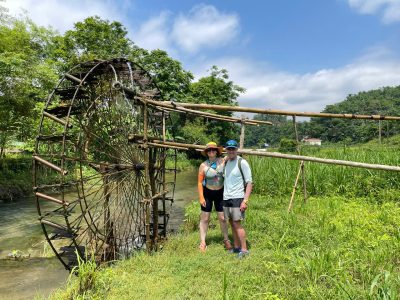
Traditional bamboo water wheels are one of the iconic cultural symbols of Pù Luông.
Vietnam Hidden Destinations Map
This map highlights some of the best less touristy places in Vietnam for trekking, slow travel, peaceful nature, and authentic local experiences — including hidden rice terrace regions, quiet islands, remote mountain valleys, and village-based travel destinations.
Among all these hidden destinations, Pu Luong remains one of the best overall choices for travelers who want trekking, rice terraces, authentic village life, and peaceful landscapes within easy reach of Hanoi.
You can also explore this complete Vietnam trekking map featuring rice terrace regions, trekking routes, mountain villages, and hidden nature destinations across the country.
Why More Travelers Are Looking Beyond Vietnam’s Famous Destinations
Travel has changed.
Many travelers are no longer searching only for famous landmarks or fast-moving itineraries packed with attractions.
Instead, people increasingly want:
- meaningful experiences
- quiet landscapes
- local culture
- nature immersion
- slower travel
- human connection
Vietnam is one of the best countries in Asia for this kind of journey.
But ironically, the places promoted most heavily online are often no longer the places that feel most authentic.
Sapa remains beautiful, but parts of it now feel heavily commercialized.
Ha Long Bay is spectacular, but often crowded with cruise traffic.
Hoi An is charming, but can feel overwhelmed during busy evenings.
This does not make these places bad destinations.
But many travelers now ask a different question:
“Where can I still experience the real Vietnam?”
That question leads people toward quieter regions:
- mountain villages
- lesser-known national parks
- hidden bays
- remote valleys
- slow countryside life
And this is where Vietnam becomes extraordinary again.
Less Touristy Alternatives to Vietnam’s Famous Destinations
One of the smartest ways to travel through Vietnam is not necessarily avoiding famous regions completely, but choosing quieter alternatives nearby.
Many less touristy places offer similar landscapes and cultural experiences without the same crowds or commercialization.
| Popular Destination | Less Touristy Alternative | Why It Works |
|---|---|---|
| Sapa | Pù Luông | Rice terraces, trekking and ethnic villages with a quieter atmosphere |
| Ha Long Bay | Bai Tu Long Bay | Similar limestone scenery with fewer cruise crowds |
| Phu Quoc | Con Dao | More peaceful islands and stronger connection to nature |
| Da Lat | Kon Tum | Central Highlands culture without mass tourism |
| Da Nang | Quy Nhon | Coastal scenery with a slower local rhythm |
| Ninh Binh | Pù Luông countryside | Limestone valleys and rice fields without heavy day-tour traffic |
This is one reason Pù Luông has become increasingly special.
For travelers searching for quieter mountain destinations beyond Sapa, these best Sapa alternatives include peaceful places like Pu Luong, Cao Bang, and Ba Be Lake.
It is not simply another hidden destination.
It is one of the few places in northern Vietnam where travelers can experience:
- trekking
- rice terraces
- local villages
- jungle landscapes
- slow travel
- authentic culture
without feeling trapped inside a tourism machine.
For a longer journey through less touristy places in Northern Vietnam, consider our Northern Vietnam trek without Sapa, an 8-day private route through Van Long, Cuc Phuong, Pu Luong, Mai Chau and Hang Kia Pa Co.
1. Pù Luông — The Best Less Touristy Place in Vietnam for Trekking and Village Life
If there is one destination that best represents the quieter side of northern Vietnam, it may be Pù Luông.
Located around four hours southwest of Hanoi, Pù Luông Nature Reserve feels surprisingly untouched compared with many famous mountain destinations in Vietnam.
The road slowly narrows as you leave the city behind.
Concrete disappears.
The air becomes cooler.
Rice terraces begin to spread across the valleys.
Small Thai villages sit between bamboo forests and limestone mountains. Water buffalo move slowly along narrow paths. In the late afternoon, smoke rises gently from traditional stilt houses as people return from the fields.
Unlike destinations built around tourism, life in Pù Luông still feels shaped primarily by agriculture and village traditions.
That changes the atmosphere completely.
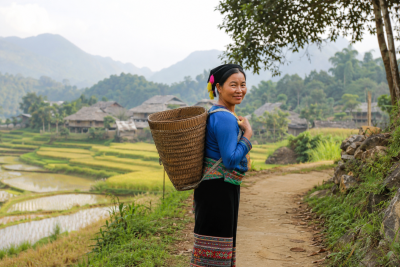
Life in Pu Luong still feels deeply connected to farming traditions and local culture.
Why Pù Luông Feels Different
Many hidden places eventually become famous and lose the qualities that made them special.
Pù Luông still feels early in that journey.
There are no giant resorts dominating the valleys.
No cable cars crossing the mountains.
No nightlife districts filled with loud music.
In many parts of Southeast Asia, tourism now shapes daily life.
In Pù Luông, daily life still shapes tourism.
That difference is subtle, but travelers feel it quickly.
At night, the loudest sounds are often insects and flowing water.
In the morning, mist drifts slowly through the rice terraces while villagers begin working in the fields.
Some trails disappear briefly into bamboo groves before opening again onto huge green valleys.
These are small moments.
But they are often the moments travelers remember most.
Trekking in Pù Luông
For travelers who love walking, Pù Luông is one of the best trekking destinations in Vietnam.
The landscape constantly changes:
- rice terrace trails
- bamboo forests
- jungle valleys
- suspension bridges
- hidden streams
- waterfalls
- remote mountain hamlets.
Travelers searching for deeper local experiences may also enjoy this guide to authentic village trekking in Vietnam, focused on walking through real communities rather than tourist-focused routes.
Some routes are soft village walks.
Others become demanding jungle treks through steep valleys and muddy forest trails after rain.
One of the biggest differences between trekking in Pù Luông and more commercial destinations is that the trails still feel connected to real village life.
You are not simply walking between tourist viewpoints.
You pass through villages where people are farming, weaving, cooking, fishing, and living normally.
That authenticity gives trekking here a very different feeling.
You can explore some of the best local routes in this guide to Pu Luong trekking routes and trails.
For travelers who want quieter paths and a more flexible pace, private Pu Luong trekking tours are often the best way to experience the reserve more deeply.
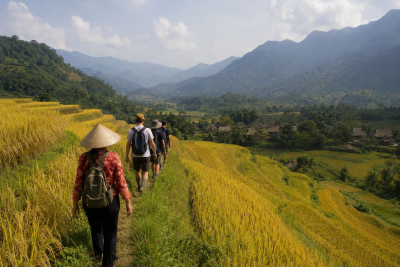
Village trekking in Pu Luong offers a quieter alternative to Sapa.
Why Pù Luông Feels Less Touristy Than Sapa
Many travelers compare Pù Luông with Sapa because both regions offer rice terraces and trekking.
But the atmosphere is completely different.
Before planning your journey, this practical Pu Luong travel guide covers transportation, trekking seasons, local villages, and useful travel tips.
Sapa is larger, colder, higher, and far more developed. It has famous viewpoints, large hotels, busy trekking routes, and increasing traffic during peak seasons.
Pù Luông feels softer and slower.
The trekking here is not mainly about conquering mountains or ticking off famous viewpoints. It is about moving gradually through valleys, forests, rice fields, and villages where tourism still feels secondary to everyday life.
For many travelers, that creates a stronger emotional connection.
If you are deciding between the two destinations, this detailed comparison of Pu Luong or Sapa explains the differences in trekking, atmosphere, and travel style.

Some trekking routes in Pù Luông pass through hidden jungle and bamboo forest trails.
Why Pù Luông Is the Best Overall Hidden Destination Near Hanoi
Some less touristy places in Vietnam are more remote than Pù Luông.
Cao Bang is wilder.
Ha Giang is more dramatic.
Ba Be is quieter.
But Pù Luông has something few destinations balance as well:
accessibility, authenticity, comfort, and nature.
For travelers wondering when to experience the green rice fields or golden harvest season, this guide about the best time to visit Pu Luong explains the weather and trekking conditions throughout the year.
It is close enough to Hanoi for a short trip.
Wild enough to feel disconnected from the city.
Comfortable enough for first-time visitors.
Authentic enough for experienced travelers.
That balance is rare.
And it is one reason many travelers now consider Pù Luông one of the best alternatives to Sapa in Vietnam.
If you are planning your first visit, this complete Pu Luong travel guide explains where to stay, what to expect, and how to experience the reserve more deeply.
2. Cao Bang — Vietnam’s Most Underrated Mountain Region
Near Vietnam’s northern border with China, Cao Bang remains one of the country’s most overlooked destinations.
Which is surprising.
Because the landscapes here are extraordinary.
Huge limestone mountains rise above winding rivers and hidden valleys. Quiet roads pass through tiny villages where tourism still feels minimal compared to more famous mountain regions.
The area is best known for Ban Gioc Waterfall, one of the largest waterfalls in Asia.
But the real beauty of Cao Bang is often found between the famous attractions:
- empty mountain roads
- hidden valleys
- karst landscapes
- remote villages
- peaceful countryside
Compared to Ha Giang, Cao Bang still receives far fewer backpacker groups and organized tours.
For travelers who love road trips, photography, and dramatic scenery without crowds, it is one of the best hidden destinations in Vietnam.
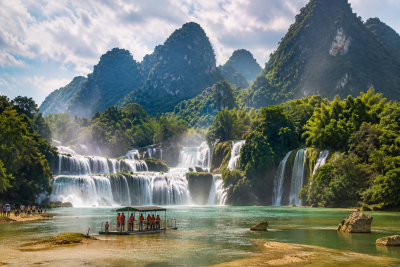
Cao Bang offers some of the most dramatic mountain landscapes in Vietnam.
3. Ba Be Lake — Slow Travel in Northern Vietnam
Ba Be Lake is not dramatic in the same way as Ha Giang or Cao Bang.
Its beauty is quieter than that.
Early morning mist drifts slowly across still water. Wooden boats move silently through limestone valleys. Birds echo across the lake while fishermen begin their day.
Located inside Ba Be National Park, the region combines:
- freshwater lakes
- jungle landscapes
- waterfalls
- caves
- Tay villages
- peaceful homestays
This is one of the best places in Vietnam for travelers who simply want to slow down.
Not every destination needs a famous attraction.
Sometimes atmosphere itself becomes the reason to stay.
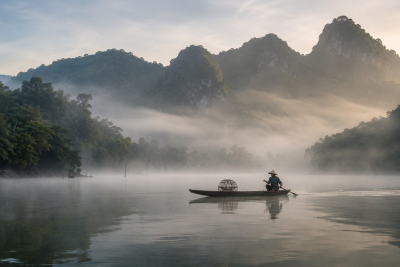
Ba Be Lake is one of the quietest natural escapes in northern Vietnam.
4. Bai Tu Long Bay — A Quieter Alternative to Ha Long Bay
Ha Long Bay is one of the most famous landscapes in Asia.
It is also one of the busiest.
For travelers who love limestone islands but want fewer crowds and a calmer atmosphere, Bai Tu Long Bay offers one of the best alternatives in Vietnam.
The scenery is similar:
- emerald water
- limestone karsts
- fishing villages
- hidden beaches
But the atmosphere feels very different.
Cruise traffic is lighter.
The water feels calmer.
The experience feels slower and less commercial.
For many travelers, Bai Tu Long Bay captures the beauty they imagined Ha Long Bay would have before mass tourism arrived.
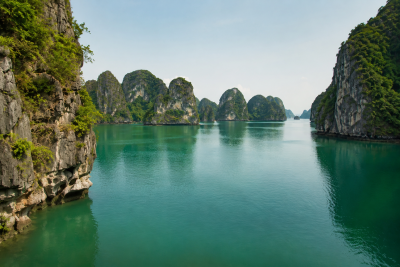
Bai Tu Long Bay offers a quieter alternative to Ha Long Bay.
5. Bach Ma National Park — One of Vietnam’s Best Jungle Escapes
Between Hue and Da Nang sits one of Vietnam’s least visited national parks.
Bach Ma feels wild in a way many famous destinations no longer do.
The rainforest is thick and humid.
Trails disappear into mist.
Waterfalls crash through dense jungle valleys.
Compared to northern trekking destinations, Bach Ma receives surprisingly few visitors.
That silence becomes part of its beauty.
Travelers who enjoy:
- jungle trekking
- waterfalls
- wildlife
- mountain weather
- remote trails
often find Bach Ma deeply rewarding.
6. Kon Tum — Vietnam’s Forgotten Highlands
Kon Tum rarely appears on mainstream Vietnam itineraries.
Which is exactly why it remains so interesting.
Located in the Central Highlands, the region offers:
- ethnic minority villages
- traditional Rong houses
- coffee plantations
- quiet countryside roads
- forest landscapes
- Bahnar and Jarai cultural influences
Tourism infrastructure remains limited compared with Da Lat or Hoi An.
For some travelers, that is a disadvantage.
For others, it is the entire reason to go.
Kon Tum still feels grounded in local life rather than tourism.
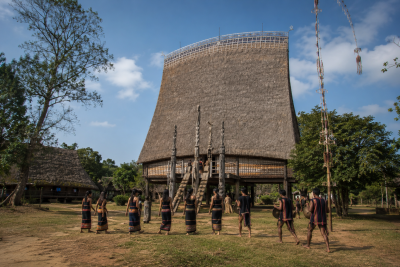
Kon Tum remains one of Vietnam’s least visited cultural regions.
7. Con Dao — Vietnam Before Mass Tourism
Con Dao feels very different from places like Phu Quoc.
The islands are quieter, less developed, and far more connected to nature.
Travelers come here for:
- empty beaches
- marine life
- national park landscapes
- peaceful roads
- slower island life
At times, Con Dao feels like what many Southeast Asian islands looked like before large-scale tourism arrived.
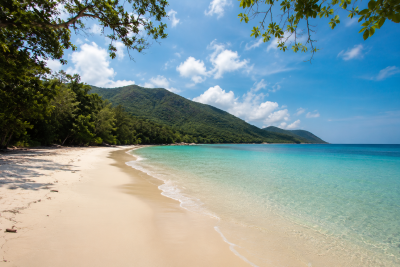
Con Dao still feels quieter and more connected to nature than many famous islands in Vietnam.
8. Hoang Su Phi — Remote Rice Terraces Without the Sapa Crowds
Hoang Su Phi is one of the most impressive rice terrace regions in Vietnam, but receives far fewer visitors than Sapa.
The roads are longer.
The infrastructure is simpler.
The landscapes feel more remote.
For travelers willing to move more slowly and travel farther, the reward is extraordinary:
- endless terraces
- high mountain villages
- ethnic minority culture
- peaceful scenery
This is one of the best destinations in Vietnam for photographers and experienced mountain travelers.
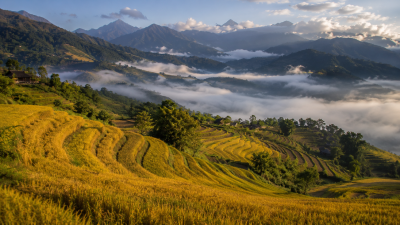
Hoang Su Phi offers some of Vietnam’s most spectacular rice terrace landscapes without the crowds of Sapa.
9. Mu Cang Chai — Rice Terrace Landscapes at Their Best
Mu Cang Chai has become increasingly popular with photographers, especially during rice harvest season.
Yet outside peak periods, much of the region still feels quiet compared with Sapa.
The best experience here is not simply reaching famous viewpoints.
It is driving slowly through the valleys, stopping in small villages, and watching how the rice terraces change color and texture throughout the day.
10. Quy Nhon — A Quieter Coastal Alternative to Da Nang
Quy Nhon remains one of Vietnam’s most underrated coastal cities.
Unlike Da Nang or Nha Trang, the atmosphere here still feels relatively local.
Travelers come for:
- long beaches
- seafood
- coastal roads
- Cham towers
- slower daily life
The city is developing, but still feels calmer and less commercial than many better-known beach destinations.
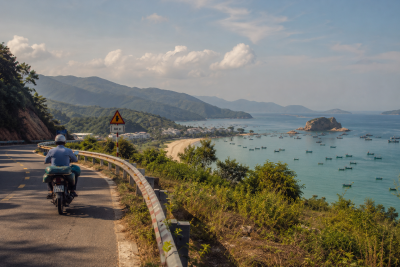
Quy Nhon remains one of Vietnam’s most underrated coastal cities.
11. Tra Vinh — A Different Side of the Mekong Delta
Many travelers visit the Mekong Delta through Can Tho or Ben Tre.
Tra Vinh offers something quieter.
The province is known for:
- Khmer temples
- tree-lined roads
- rice fields
- small canals
- slow countryside life
This is not a destination built around major attractions.
That is exactly why some travelers love it.
12. Ha Tien — A Quiet Border Town by the Sea
Near the Cambodian border, Ha Tien feels very different from the busier parts of southern Vietnam.
There are limestone hills, seafood restaurants, old temples, quiet beaches, and a frontier atmosphere that gives the town a unique character.
It is not polished.
But it feels real.
13. Phong Nha Countryside — Beyond the Famous Caves
Phong Nha is famous for its caves, but many travelers discover that the countryside surrounding the national park becomes just as memorable.
Rice fields stretch beneath limestone mountains. Quiet roads pass through duck farms and villages beside the river.
Cycling through these landscapes at sunrise often becomes one of the best experiences in central Vietnam.
Best Less Touristy Places in Vietnam by Travel Style
| Travel Style | Best Place | Why |
|---|---|---|
| Best trekking near Hanoi | Pù Luông | Rice terraces, local villages, quiet trails |
| Best mountain scenery | Cao Bang | Waterfalls, valleys and remote roads |
| Best slow travel lake destination | Ba Be Lake | Peaceful homestays and nature |
| Best jungle trekking | Bach Ma | Rainforest and waterfalls |
| Best quiet island escape | Con Dao | Nature and peaceful beaches |
| Best Central Highlands culture | Kon Tum | Ethnic villages and Rong houses |
| Best quiet coastal city | Quy Nhon | Beaches without heavy tourism |
| Best alternative to Ha Long Bay | Bai Tu Long Bay | Similar scenery with fewer crowds |
So, What Is the Best Less Touristy Place in Vietnam?
There is no perfect answer for everyone.
Some travelers will prefer the dramatic mountain roads of Cao Bang.
Others may fall in love with the quiet islands of Con Dao or the lake atmosphere of Ba Be.
But for travelers looking for the best overall combination of:
- trekking
- rice terraces
- village life
- authentic culture
- peaceful landscapes
- accessibility from Hanoi
Pù Luông is one of the strongest choices in Vietnam.
It is quieter than Sapa.
More intimate than Ha Long Bay.
More connected to local life than many famous tourist destinations.
For travelers who want to walk slowly, stay close to nature, and experience a more authentic side of northern Vietnam, Pù Luông is not simply another hidden destination.
It may be the Vietnam they were hoping to find.
You can begin exploring the reserve through this complete Pu Luong trekking guide, including village routes, jungle trekking, rice terrace trails, and local-led experiences designed for slower and more meaningful travel.
Frequently Asked Questions About Less Touristy Places in Vietnam
What is the best less touristy place in Vietnam?
Pù Luông is one of the best less touristy places in Vietnam for travelers who want trekking, rice terraces, local villages, and peaceful nature near Hanoi. Other excellent options include Cao Bang, Ba Be Lake, Bai Tu Long Bay, Kon Tum, and Con Dao.
Is Pù Luông less touristy than Sapa?
Yes. Pù Luông is generally quieter and less developed than Sapa. It has fewer tour groups, less commercial infrastructure, and a stronger feeling of village-based slow travel.
Where can I see rice terraces in Vietnam without crowds?
Pù Luông, Hoang Su Phi, and Mu Cang Chai are among the best places to see rice terraces without the heavy crowds often found in Sapa.
What is the best hidden trekking destination in Vietnam?
Pù Luông is one of the best hidden trekking destinations in Vietnam thanks to its quiet village trails, bamboo forests, waterfalls, and local-guided trekking routes.
What is the best less touristy place near Hanoi?
Pù Luông is one of the best less touristy destinations near Hanoi because it combines trekking, rice terraces, local villages, and peaceful nature within around four hours of the capital.
What is the best alternative to Ha Long Bay?
Bai Tu Long Bay is one of the best alternatives to Ha Long Bay because it offers similar limestone scenery with a quieter and less commercial atmosphere.
Are less touristy places in Vietnam difficult to reach?
Some destinations, such as Hoang Su Phi or Cao Bang, require longer travel times. Others, including Pù Luông and Bai Tu Long Bay, are relatively accessible while still feeling much less crowded than Vietnam’s most famous tourist hotspots.
For travelers interested in slower and more meaningful experiences, this guide to slow travel in Vietnam explains why Pu Luong has become a favorite destination for peaceful trekking and authentic village life.
Written from the perspective of a local trekking team based in northern Vietnam, with years of experience guiding travelers through Pù Luông’s rice terraces, Thai villages, jungle valleys, and less touristy trekking routes.
Pu Luong Trekking – Local Travel Experts
Authentic local insights into Pu Luong Nature Reserve, including trekking routes, village experiences, and slow travel journeys in northern Vietnam.
Based on real local experience from guiding travelers in Pu Luong and continuously updated to reflect actual trekking conditions, village life, and seasonal changes in Pu Luong.