
Pu Luong Trekking: Routes, Villages and Multi-Day Trekking Guide
This page focuses specifically on Pu Luong trekking — walking routes, distances, village connections, and how trekking here differs from typical hiking tours.
Pu Luong trekking is not about conquering a summit or rushing through scenic viewpoints. It is about walking slowly through rice terraces, forests, and remote Thai villages where daily life continues unchanged by mass tourism.
Located in northern Vietnam, Pu Luong Nature Reserve offers one of the most authentic trekking experiences in the country. Trails connect small villages, waterfalls, bamboo forests, and valleys rather than tourist hotspots. Most routes are walked at a human pace, guided by locals who understand both the land and its people.
This style of trekking is best suited for travelers seeking meaningful connection, cultural depth, and quiet landscapes — not crowds, cable cars, or rushed itineraries.
For travelers searching specifically for Pu Luong trekking, this reflects a slow, village-based walking experience rather than a checklist hike.
All walking routes described below take place within the broader landscape of Pu Luong Nature Reserve, where forests, terraced rice fields, and village life form a protected conservation area rather than a conventional tourist park.
If you are looking for detailed routes, itineraries, and local insights, this page connects you to everything you need to plan your journey.
Pu Luong trekking is a slow walking experience through rice terraces, remote villages, and forest paths, best explored over 2 to 4 days.
Unlike typical trekking destinations, Pu Luong focuses on cultural immersion, natural rhythm, and human-paced travel rather than distance or challenge.
While this guide explains the routes and difficulty, the real feeling of trekking in Pu Luong is best understood through actual experiences.
Before planning your trekking routes, it’s important to understand how to get to Pu Luong, including travel time, transport options, and real conditions from Hanoi or nearby regions.
👉 Explore real trekking stories from travelers
If you’re planning a trip and wondering whether Pu Luong is worth visiting, this complete guide will help you understand what to expect and who it is best suited for.
Quick Answer: What Is Pu Luong Trekking?
Pu Luong trekking is a multi-day walking experience through rice terraces, bamboo forests, and traditional Thai villages in northern Vietnam.
Unlike mountain hiking, it focuses on slow travel, village connections, and cultural immersion rather than summits or viewpoints.
One of the most balanced trekking experiences is the Pu Luong trekking 3 days itinerary, which combines village trekking, rice terraces, and remote nature trails in a comfortable pace.
Pu Luong Trekking Guide: Everything You Need to Know Before You Go
If you are searching for a complete Pu Luong trekking guide, the most important thing to understand is that trekking here is not about conquering a mountain. It is about walking slowly through rice terraces, bamboo forests, valley paths, and traditional Thai villages where daily life still shapes the landscape.
Pu Luong is best suited for travelers who want a quiet, human-paced journey rather than a rushed sightseeing trip. Most trekking experiences here are designed around village connections, seasonal scenery, and cultural immersion, with flexible walking distances depending on weather, pace, and travel style.
This guide will help you understand the essentials before planning your trip: what Pu Luong trekking is really like, how many days you need, which routes are most rewarding, when to go, how difficult it is, whether it is safe for beginners, and who this experience is best for.
- Best trekking itineraries from 2 to 5 days
- Main trekking routes and village connections
- Best time to trek in Pu Luong
- Safety, trail conditions, and beginner suitability
- Who Pu Luong trekking is for
- Frequently asked questions
Unlike destinations built around high-altitude climbs or viewpoint chasing, Pu Luong trekking is about living landscapes. You walk through places where people farm, cook, weave, raise buffalo, and move between villages on the same paths you follow. That is what makes it one of the most meaningful slow travel experiences in northern Vietnam.
Sustainable Trekking in Pu Luong
Nestled in the heart of Pu Luong Nature Reserve, Pu Luong offers one of the most authentic sustainable trekking experiences in Vietnam. Unlike mass tourism destinations, trekking here follows a low-impact, community-based approach that preserves both nature and local culture.
Instead of crowded trails, you will walk through quiet rice terraces, tropical forests, and traditional Thai villages where daily life remains unchanged for generations. This form of eco trekking in Pu Luong supports local families directly — from homestay hosts to local guides — ensuring that tourism benefits the community rather than disrupts it.
What makes Pu Luong truly special is its balance between comfort and responsibility. Travelers can enjoy meaningful experiences such as staying in locally run homestays, sharing home-cooked meals, and learning about traditional weaving, all while minimizing environmental impact.
Compared to more commercial trekking destinations like Sapa, Pu Luong remains a hidden gem for those seeking slow travel, sustainable tourism, and genuine cultural connection.
If you are looking for an alternative that combines nature, culture, and responsible travel, Pu Luong stands out as one of the best destinations for sustainable trekking in Southeast Asia.
If you are looking for a complete experience, you can explore our curated Pu Luong package tours designed for private slow travel, authentic village stays, and seamless logistics from Hanoi.
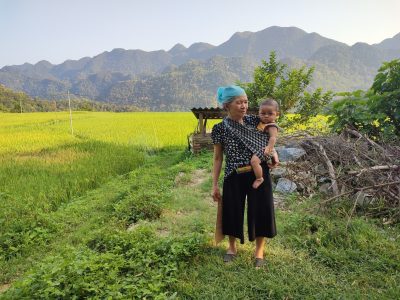
Experience sustainable trekking in Pu Luong with rice terraces, local villages, and slow travel journeys.
Is Pu Luong Trekking Worth It?
Yes, Pu Luong trekking is ideal for travelers seeking slow, meaningful experiences rather than fast-paced tourism.
It is especially suitable for those who value nature, culture, and quiet exploration.
If you are looking for organized experiences, see Pu Luong hiking tours.
You can combine this with a Ninh Binh to Pu Luong tour.
What Is Pu Luong Trekking? A Practical Guide for First-Time Travelers
Pu Luong trekking refers to multi-day walking journeys through the valleys, rice terraces, bamboo forests, and ethnic Thai villages inside Pu Luong Nature Reserve in northern Vietnam.
Unlike high-altitude trekking routes in places like Sapa or Ha Giang, Pu Luong trekking focuses on slow walking through living landscapes where farming and village life continue unchanged.
Walking distances vary depending on route and pace, but most journeys are designed to remain comfortable and accessible.
Pu Luong trekking is best understood through real walking experiences and local routes.
You can explore detailed paths in our trekking routes guide.
Pu Luong trekking is often compared to destinations like Sapa or Ha Giang, but offers a very different experience focused on low-altitude valley trekking rather than mountain climbs.
Common landscapes include rice terraces, bamboo forests, limestone valleys, and traditional stilt-house villages of the Thai ethnic group.
Check our best-selling Pu Luong trekking 3 days itinerary
For a balanced experience or explore detailed trekking routes connecting villages across the valley.
Before planning your route, you might ask is Pu Luong worth it for trekking — especially compared to other destinations like Sapa.
Pu Luong Trekking Itinerary (2–5 Day Options)
Pu Luong trekking journeys are typically designed from 2 to 5 days, depending on how deeply you want to explore the region.
Short journeys focus on valley landscapes and nearby villages, while longer routes connect more remote areas across the nature reserve.
Rather than fixed itineraries, most trekking experiences in Pu Luong are flexible and adjusted to your pace, season, and preferences.
→ Explore detailed options:
• 2-day trekking
• 3-day trekking
• 4– day trekking
• 5– day trekking journeysAll itineraries are built based on real trekking routes and can be visualized through our Pu Luong trekking map.
Pu Luong Trekking Routes and Village Connections
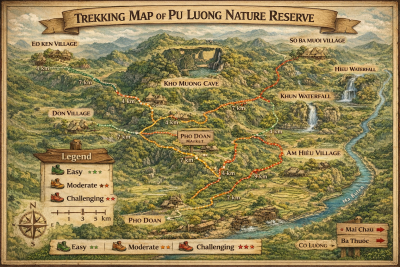
Pu Luong trekking routes are not fixed trails but a network of village paths connecting valleys, forests, and remote communities.
- Don – Uoi – Lan Valley: Easy to moderate routes through rice terraces and bamboo water wheels (6–10 km)
- Kho Muong Route: Moderate trekking through forest paths and limestone caves (10–14 km)
- Hieu Waterfall Route: Scenic valley trekking ending at waterfalls (8–12 km)
- Remote Valley Routes: Less-visited areas for deeper trekking experiences (12–18 km)
Each route can be adjusted based on season, weather, and walking pace.
→ For detailed routes and distances, see the full trekking routes guide.
You can also view a visual overview in the Pu Luong trekking map to better understand distances and terrain.
Map showing typical trekking routes and difficulty levels across Pu Luong Nature Reserve.
Pu Luong Trekking Difficulty and Distance
| Level | Distance | Who it’s for |
|---|---|---|
| Easy | 4–6 km/day | Beginners, families |
| Moderate | 6–12 km/day | Most travelers |
| Challenging | 12–18 km/day | Experienced trekkers |
Most Pu Luong trekking routes are moderate and suitable for travelers with basic fitness.
What Makes Pu Luong Trekking Different?
Not about summits, but about living landscapes
Unlike mountain trekking destinations focused on altitude or panoramic viewpoints, Pu Luong trekking is centered on landscapes where people still live and work. Trails pass through rice terraces, water wheels, corn fields, and village paths rather than isolated mountain ridges.
Walking through villages, not viewpoints
Trekking in Pu Luong means entering villages where children walk home from school, elders weave baskets, and farmers tend buffalo. These encounters happen naturally, without performance or staging.
Many of the trekking routes pass through traditional villages. To explore them in detail, read our Pu Luong villages travel guide.
Slow trekking versus mass tourism hiking
Pu Luong trekking emphasizes shorter walking distances, frequent stops, and flexibility. The goal is not to finish fast, but to stay present and observe the rhythm of local life.
Looking for a complete experience? Explore our Pu Luong trekking Package designed as private slow travel journeys.
For travelers planning a longer journey, this Pu Luong itinerary 4 days shows how to explore the reserve at a slower and more immersive pace.
Trekking in Pu Luong: What to Expect
Trekking in Pu Luong is less about distance and more about rhythm.
You move through changing landscapes — rice terraces, forests, and villages — at a pace shaped by the environment and daily life around you.
Real local life, not curated experiences
There are no ticket gates or artificial viewpoints. What you see along the trail reflects real daily activities, seasonal farming cycles, and traditional village life.
Trekking is the best way to discover real local life. Learn more in our Pu Luong authentic experiences guide.
Designing routes around real villages, not highlights
Many private routes are designed around villages that do not appear on standard trekking maps. These include limestone settlements, quiet farming valleys, and forest villages near protected areas. To understand why certain villages require private pacing and seasonal adjustment, we recommend reading our in-depth guide to villages best explored through slow trekking in Pu Luong.

Trekking routes in Pu Luong often follow village paths used by locals every day.
Types of Pu Luong Trekking Experiences
Trekking in Pu Luong ranges from short village walks to multi-day journeys across remote valleys.
Some travelers prefer a brief introduction, while others choose longer routes for deeper immersion.
→ To make your trip easier to plan, you can explore all Pu Luong trekking packages and choose the itinerary that matches your trekking level and travel time.
Best Time for Pu Luong Trekking
- May – June: Green rice terraces
- September – October: Golden harvest season
- October – April: Cool and dry weather, ideal for trekking
- July – August: Rainy season, trails can be slippery
The best overall time is during rice seasons when landscapes are most scenic.
👉 For a detailed seasonal breakdown, read our complete guide to Pu Luong trekking weather and seasons.
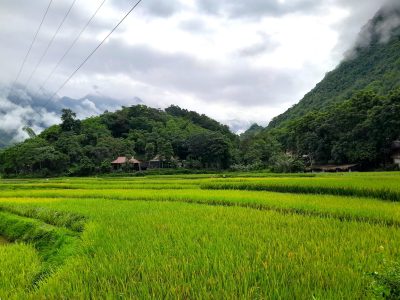
Rice terraces in Pu Luong change beautifully with the seasons.
Is Pu Luong Trekking Safe?
Trail conditions and weather awareness
Most trekking routes follow village paths and established trails. Weather conditions, especially rain, can affect safety and should be considered when planning.
Trekking with or without a guide
Local guides play a key role in ensuring safety by choosing suitable routes, monitoring weather changes, and adjusting pace. Many travelers choose to explore with local trekking guides in Pu Luong to experience the landscape more deeply and safely.
Seniors and children
With appropriate route selection and pacing, Pu Luong trekking can be safe for older travelers and families.
👉 Read detailed safety guidance:
Is Pu Luong Trekking Safe?
Pu Luong Trekking Map Overview
The trekking map of Pu Luong includes valley routes, village connections, and forest trails across the nature reserve.
Key trekking areas:
- Don Village and central valley
- Kho Muong cave and forest zone
- Hieu waterfall valley
- Remote limestone villages
A visual trekking map helps travelers understand distances, terrain, and route difficulty before planning their journey.

Typical trekking route for a 4 day Pu Luong itinerary connecting villages and rice terraces.
Best Villages for Trekking in Pu Luong
Pu Luong trekking passes through traditional Thai villages where daily life remains unchanged.
- Don Village: Central trekking hub
- Kho Muong: Remote cave village
- Hieu Village: Waterfall and valley scenery
- Lan Village: Quiet farming landscapes.
Who Is Pu Luong Trekking For (And Not For)
Ideal travelers
Pu Luong trekking suits travelers who value slow travel, cultural authenticity, and quiet landscapes. It is ideal for those comfortable with walking, simple accommodations, and flexible itineraries.
If you’re planning your journey, choosing the right place to stay will shape your entire experience. Read our detailed guide on where to stay in Pu Luong Nature Reserve to understand the differences between eco lodges, village homestays, and trekking-based stays.
Who should not choose trekking here
Travelers seeking luxury resorts, nightlife, or fast-paced sightseeing may find Pu Luong trekking unsuitable.
For travelers who prefer less walking, consider motorbike tours in Pu Luong.
Trekking with Local Guides in Pu Luong
Why local knowledge matters
Local guides understand seasonal trail changes, village customs, and unmarked paths that maps do not show.
Human pace and cultural respect
Guided trekking supports local livelihoods and ensures respectful interaction with communities while maintaining a relaxed walking rhythm.

Local guides lead trekking journeys at a human pace, adjusting routes and rhythm naturally.
👉 Learn more about local-guided trekking:
Trekking with Local Guides in Pu Luong
Real Pu Luong Trekking Stories and Reviews
What travelers remember most
Guests often recall quiet mornings in villages, shared meals with hosts, and unplanned moments along the trail rather than specific landmarks.
👉 Read traveler experiences:
Pu Luong Trekking Reviews

Quiet village mornings are often what travelers remember most from Pu Luong trekking.
## Private Pu Luong Tour Packages
Some travelers look for Pu Luong Private tours with fixed pricing and set departures.
Our approach is different.
We design private trekking journeys that include transport, local guides, accommodation, and meals — but without rigid group schedules.
If you prefer a curated, flexible experience rather than a standard package tour, our private trekking options may be a better fit. If you are planning your journey, start with our detailed
trekking itinerary based on your travel style.
If you still have questions after reading this Pu Luong trekking guide, the answers below cover the most common concerns about difficulty, safety, weather, local guides, and whether Pu Luong is suitable for beginners, older travelers, or families.
Frequently Asked Questions about Pu Luong Trekking
Is Pu Luong trekking difficult?
Pu Luong trekking is generally moderate and suitable for travelers with basic fitness. Most routes follow village paths and rice terraces rather than steep mountain trails. Difficulty depends on distance, weather, and pace, which can be adjusted to match each traveler’s ability.
Is Pu Luong trekking safe for beginners?
Yes. Beginners can enjoy Pu Luong trekking by choosing shorter routes and walking at a relaxed pace. Trekking with local guides helps ensure route safety, proper pacing, and comfort throughout the journey.
You can read a detailed safety guide in our article on Is Pu Luong Trekking Safe
What is the best time for Pu Luong trekking?
The best time for Pu Luong trekking is during the rice seasons from May to June and September to October, when the weather is comfortable and landscapes are most scenic. Dry months are also suitable for easier walking.
A full seasonal guide to Best Time for Pu Luong Trekking
Can older travelers do Pu Luong trekking?
Yes. Many older travelers enjoy Pu Luong trekking because routes are flexible and focused on cultural immersion rather than physical challenge. Many older travelers enjoy Pu Luong trekking thanks to its flexible pace and village-based routes.
Is Pu Luong trekking suitable for children?
Pu Luong trekking can be suitable for children on short, village-based routes with close supervision. Gentle paths and interaction with local life often make the experience engaging for young travelers.
Do I need a local guide for Pu Luong trekking?
While independent trekking is possible, local guides greatly enhance safety, cultural understanding, and route flexibility. They adjust paths based on weather and ensure respectful interaction with village communities.
Our detailed guide on Trekking with Local Guides in Pu Luong
What kind of experience should I expect from Pu Luong trekking?
Travelers should expect a slow-paced journey focused on nature, villages, and daily life rather than sightseeing highlights. Pu Luong trekking emphasizes presence, cultural connection, and quiet landscapes.
If you are planning your journey, start with our detailed trekking itinerary based on your travel style.
Plan Your Pu Luong Trekking Journey
If you prefer a curated journey with local guides, explore our
private Pu Luong trekking tours, designed as slow travel experiences through villages, rice terraces, and forest valleys.
Explore More About Pu Luong
- Pu Luong Nature Reserve Guide
- Best Trekking Routes
- Top Things to Do
- Weather & Seasons
- Best Time to Visit
Pu Luong Trekking – Local Travel Experts
Authentic local insights into Pu Luong Nature Reserve, including trekking routes, village experiences, and slow travel journeys in northern Vietnam.
Based on real local experience from guiding travelers in Pu Luong and continuously updated to reflect actual trekking conditions, village life, and seasonal changes in Pu Luong.