
Pu Luong Rice Terrace Map: Best Valleys and Villages to See the Terraces
Pu Luong Rice Terrace Map: Where to See the Best Views
The Pu Luong rice terrace map highlights the most beautiful trekking areas, including remote villages, valleys, and scenic viewpoints. These locations offer some of the most authentic landscapes in Northern Vietnam.
The rice terraces of Pu Luong Nature Reserve are among the most beautiful landscapes in northern Vietnam. Spread across quiet valleys and traditional Thai villages, these terraces create a layered mountain scenery that changes dramatically throughout the year.
Understanding where the terraces are located helps travelers plan trekking routes, choose the best villages to visit, and experience the region beyond the most common viewpoints.
This guide introduces the main valleys and villages where travelers can explore the rice terraces across Pu Luong.
If you are traveling from Europe, explore our private trekking experiences tailored for European travelers.
Discover the charm of pu luong trekking routes surrounded by rice terraces and forests.
There are many best trekking tours in pu luong available.
One highlight is the pu luong trekking itinerary 3 days.
Where Are the Rice Terraces Located in Pu Luong?
Rice terraces in Pu Luong are not concentrated in a single location. Instead, they are spread across several valleys connected by small village paths and trekking trails.
Most terraces are located inside Pu Luong Nature Reserve in Thanh Hoa Province, about 4–5 hours from Hanoi.
The main terrace areas include:
-
Don Valley
-
Uoi Valley
-
Kho Muong Valley
-
Hieu Valley
Each valley offers slightly different landscapes and trekking experiences.
One of the best ways to explore the terraces comfortably is through a family friendly Pu Luong tour designed around easy walking routes and local experiences.
Pu Luong Rice Terrace Map Overview
The terraces follow the natural mountain slopes and are usually located close to traditional villages.
Key terrace areas include:
| Valley | Village | Landscape |
|---|---|---|
| Don Valley | Don Village | Wide terraces and open valley views |
| Uoi Valley | Uoi Village | Quiet walking trails through rice fields |
| Kho Muong Valley | Kho Muong | Remote valley surrounded by limestone mountains |
| Hieu Valley | Hieu Village | Rice terraces combined with waterfalls |
These valleys are connected by scenic trekking routes, allowing travelers to explore multiple terrace areas during a multi-day walk.
Best Villages to See Rice Terraces
Don Village
Don Village is one of the most popular starting points for exploring Pu Luong. The terraces surrounding the village stretch across the valley and offer wide panoramic views.
Uoi Village
Uoi Village lies deeper inside the reserve and offers quieter trekking paths between rice terraces and bamboo forests.
Kho Muong Village
Kho Muong sits in a remote valley surrounded by limestone mountains. The rice terraces here are smaller but beautifully integrated into the landscape.
Hieu Village
Hieu Village combines rice terraces with waterfalls and forest scenery, making it one of the most diverse areas of Pu Luong.
Many travelers ask is Pu Luong really worth visiting — the answer depends on how much you value authentic village life and slow travel experiences.
Best Time to See the Rice Terraces
The rice terraces change appearance throughout the year.
Two periods offer the most spectacular scenery:
| Season | Landscape |
|---|---|
| Late May – Early June | First golden rice harvest |
| September – Early October | Second golden rice harvest |
During these weeks, the terraces turn golden before harvest, creating the most photogenic views across the valleys.
You can read more about seasonal timing in our Pu Luong rice harvest season guide.
Trekking Through the Rice Terraces
Many travelers explore Pu Luong by walking between villages. The trekking routes often follow traditional paths used by local farmers.
Walking through the terraces allows visitors to observe:
-
traditional farming activities
-
village life
-
changing mountain landscapes
Some routes connect multiple valleys, offering continuous views of rice terraces throughout the journey.
To better understand how the valleys and villages connect across the reserve, travelers can explore the Pu Luong trekking map, which highlights the main walking routes through rice terraces, bamboo forests, and traditional Thai villages.
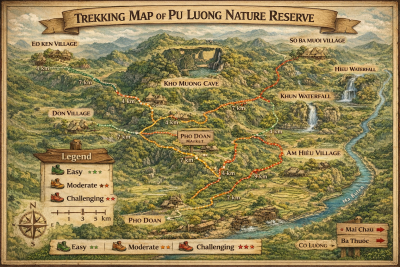
Map showing typical trekking routes and difficulty levels across Pu Luong Nature Reserve.
Pu Luong Rice Terraces vs Sapa
Sapa is often the most famous destination for rice terraces in Vietnam. However, Pu Luong offers a quieter and more intimate landscape.
While Sapa features large mountain terraces and developed tourism infrastructure, Pu Luong remains more rural, with smaller villages and fewer crowds.
Many travelers prefer Pu Luong for its peaceful trekking routes and authentic village atmosphere.
If you are planning your journey, our Pu Luong travel guide provides practical information about villages, trekking routes, transportation from Hanoi, and the best seasons to visit.

Golden rice terraces mark the most scenic and comfortable time for trekking in Pu Luong.
Frequently Asked Questions
Where are the rice terraces in Pu Luong?
Rice terraces are located across several valleys including Don Village, Uoi Village, Kho Muong, and Hieu Village.
When is the best time to see rice terraces in Pu Luong?
The most beautiful periods are late May to early June and September to early October.
Can you trek through the rice terraces?
Yes. Many trekking routes in Pu Luong follow traditional village paths that pass through rice terraces.
Are Pu Luong rice terraces similar to Sapa?
They are smaller but often quieter and less crowded than Sapa.
Pu Luong Trekking – Local Travel Experts
Authentic local insights into Pu Luong Nature Reserve, including trekking routes, village experiences, and slow travel journeys in northern Vietnam.
Based on real local experience from guiding travelers in Pu Luong and continuously updated to reflect actual trekking conditions, village life, and seasonal changes in Pu Luong.