
Pu Luong Vietnam: A Complete Travel Guide to Pu Luong Nature Reserve
Pu Luong Vietnam is a protected mountain landscape located in Thanh Hoa Province in northern Vietnam, about 165 kilometers southwest of Hanoi. The region forms part of the Pu Luong Nature Reserve, a conservation area known for terraced rice fields, limestone forests, bamboo water wheels, and traditional Thai and Muong villages.
Unlike highly developed mountain destinations such as Sapa, Pu Luong remains largely unchanged — where farming landscapes, village life, and forest trails continue to shape everyday life.
This guide explains where Pu Luong is, what makes it special, and how travelers can experience it in a meaningful and respectful way.
Travelers who prefer slow-paced Pu Luong experiences often choose private cultural journeys rather than fixed sightseeing routes.
Nature lovers should not miss exploring pu luong by trekking through lush valleys and hidden villages.
You can choose from custom trekking packages that suit different travel styles.
Try the pu luong 3 day trekking tour for a full experience.
What Is Pu Luong Vietnam?
Pu Luong is a protected nature reserve in Thanh Hoa Province, located about 160–180 kilometers southwest of Hanoi.
For travelers planning a visit, understanding how to travel from Hanoi is important. Our detailed guide on getting from Hanoi to Pu Luong explains the most common transport options, travel times, and routes.
Despite being relatively close to the capital, Pu Luong remains largely untouched. The region is characterized by:
-
Limestone mountains and forested ridges
-
Terraced rice fields cascading into valleys
-
Remote villages of Thai and Muong ethnic groups
To better understand the geography, conservation goals, and landscape structure of the area, see our detailed guide to Pu Luong Nature Reserve.
Pu Luong Vietnam Quick Facts
Location: Thanh Hoa Province, Northern Vietnam
Distance from Hanoi: 165 km
Travel time: 4–5 hours
Area: about 17,600 hectares
Established: 1999
Best route: Hanoi – Ho Chi Minh Trail – Ba Thuoc– Pu Luong
How Big Is Pu Luong Nature Reserve
Size of Pu Luong Nature Reserve
Pu Luong Nature Reserve covers approximately 17,600 hectares of protected forest and agricultural land. The landscape stretches across Ba Thuoc and Quan Hoa districts in Thanh Hoa Province and forms part of the limestone mountain belt extending toward Mai Chau.
Where Is Pu Luong Located in Vietnam?
Pu Luong lies between the Mai Chau valley in Hoa Binh Province and the Ngoc Son – Ngo Luong Nature Reserve, forming one of the largest continuous forest landscapes in northern Vietnam.
Why Pu Luong Is Special
Pu Luong stands apart from better-known destinations like Sapa or Ninh Binh for several reasons.
A Living Landscape, Not a Tourist Park
Rice terraces are not decorative — they are farmed daily.
Water wheels are not attractions — they irrigate crops.
Villages are not exhibits — they are homes.
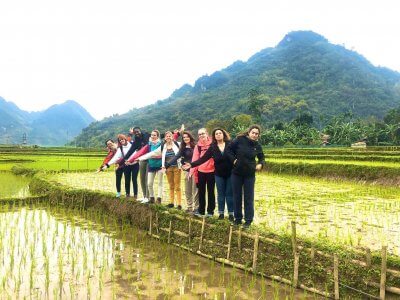
Village paths winding through rice terraces in Pu Luong Vietnam.
Authentic Ethnic Culture
Pu Luong is home primarily to Thai and Muong communities, whose architecture, farming methods, and daily routines remain deeply connected to the land.
Ideal for Slow Travel
Pu Luong rewards travelers who prefer:
-
Walking instead of driving
-
Observation instead of sightseeing
-
Presence instead of checklists.
One of the best ways to explore Pu Luong is through
👉 a 4 day trekking experience connecting villages and valleys.
The Landscape of Pu Luong Vietnam
The geography of Pu Luong shapes the experience.
The landscape forms part of the larger Pu Luong Nature Reserve conservation area, where forests, villages, and farmland coexist.
You will find:
-
Rice terraces carved into hillsides and valleys
-
Dense tropical forest covering limestone mountains
-
Streams and waterfalls flowing through villages
-
Narrow dirt paths connecting settlements
Unlike destinations built around viewpoints, Pu Luong’s beauty unfolds gradually as you move through it.
Best Time to Visit Pu Luong Vietnam
Pu Luong changes dramatically with the seasons.
-
March – April: Fresh green rice fields and mild weather
-
May – June: Early harvest season, vibrant terraces
-
September – October: Golden rice season, most scenic period
-
November – February: Cooler temperatures, quieter atmosphere
The rainy season (July–August) brings lush landscapes but also slippery trails, making careful planning essential.
How to Get to Pu Luong
Most travelers reach Pu Luong from Hanoi.
Common options include:
-
Private car: Most flexible and comfortable
-
Limousine or local bus: Budget-friendly but slower
-
Motorbike: For experienced riders only
Roads become narrower and steeper as you approach the reserve, which contributes to Pu Luong’s sense of remoteness.
Travel times, road conditions, and transport options can vary depending on the season and departure point. For a detailed breakdown of routes, vehicles, and travel tips, see our complete guide on how to travel from Hanoi to Pu Luong.
Things to Do in Pu Luong Vietnam
Walk Through Rice Terraces and Villages
Many of the most beautiful trekking routes pass through traditional villages such as Ban Don, Kho Muong, and Hieu. You can explore the most scenic trekking areas in our guide to the best villages for trekking in Pu Luong.
Walking is the most meaningful way to experience Pu Luong.
Village paths lead through:
-
Rice fields worked by hand
-
Bamboo bridges over streams
-
Quiet settlements where daily life continues undisturbed
These walks are gentle rather than strenuous and focus on immersion rather than distance.
Trekking with Local Guides
Trekking in Pu Luong is about connection, not conquest.
Local guides understand:
-
Seasonal trail conditions
-
Cultural etiquette in villages
-
Safer routes during rain or fog
Trekking routes vary from easy village walks to moderate forest trails, always shaped by the landscape rather than engineered paths.
Visit Traditional Bamboo Water Wheels
Bamboo water wheels are a defining feature of Pu Luong.
These structures lift water from streams to irrigate rice terraces using gravity and flow rather than electricity. Watching them operate offers insight into how agriculture and engineering coexist naturally.
Swim at Hieu Waterfall (Seasonal)
Hieu Waterfall is one of the few spots suitable for swimming, especially in late spring and early summer.
Conditions depend heavily on rainfall, and swimming is best done during calm water levels. The experience is simple and natural rather than dramatic.
Many of the most beautiful trekking routes pass through traditional villages such as Ban Don, Kho Muong, and Hieu. You can explore the most scenic trekking areas in our guide to the best villages for trekking in Pu Luong.
Explore by Bicycle or Motorbike
Quiet village roads make cycling and motorbiking appealing for confident travelers.
These routes allow exploration beyond walking distance, passing through valleys and forested hills with minimal traffic. Caution is advised during wet seasons.
Experience Village Life
Some of the most meaningful moments in Pu Luong come from doing very little:
-
Sitting outside a village house
-
Watching farming routines
-
Sharing tea or meals when invited
These moments cannot be planned — only allowed.
Popular villages in Pu Luong include Ban Don, Kho Muong, and Hieu Village, where trekking trails pass through rice terraces and traditional Thai houses.
For a deeper experience beyond short visits, follow a 4 day itinerary in Pu Luong.
Where to Stay in Pu Luong Vietnam
Accommodation in Pu Luong shapes the entire experience.
Most travelers choose between:
-
Village homestays near rice terraces
-
Eco-lodges overlooking valleys
-
Small mountain lodges integrated into nature
Staying close to villages allows early mornings, quiet evenings, and direct access to walking paths.
Food and Daily Life
Food in Pu Luong reflects availability and seasonality.
Meals are typically:
-
Simple and home-style
-
Shared communally
-
Prepared with local ingredients
Dining is less about variety and more about rhythm — eating when food is ready, not when a menu dictates.
Villages of Pu Luong
Pu Luong is home to several traditional Thai and Muong villages scattered across valleys and hillsides. Villages such as Ban Don, Kho Muong, and Hieu are among the most visited areas, where travelers can walk through rice terraces, observe farming routines, and stay in local homestays.
Pu Luong vs Sapa
While Sapa is one of Vietnam’s most famous mountain destinations, Pu Luong offers a quieter and less developed alternative. Instead of busy viewpoints and large tourist infrastructure, Pu Luong focuses on village life, forest trekking, and agricultural landscapes.
Is Pu Luong Right for You?
Pu Luong is ideal if you:
-
Enjoy walking and nature
-
Prefer quiet environments
-
Value authenticity over comfort
Pu Luong may not suit travelers who:
-
Seek nightlife or shopping
-
Prefer fast itineraries
-
Expect constant entertainment
Frequently Asked Questions About Pu Luong Vietnam
What is Pu Luong Vietnam?
Pu Luong Vietnam refers to Pu Luong Nature Reserve, a protected mountainous area in Thanh Hoa Province. It is known for its terraced rice fields, forested hills, waterfalls, and traditional villages where Thai and Muong communities continue their daily lives much as they have for generations.
Where is Pu Luong located?
Pu Luong is located in northern Vietnam, about 160–180 kilometers southwest of Hanoi. Despite this relatively short distance, the region feels remote due to winding mountain roads and its preserved natural landscape.
Most visitors travel from Hanoi, and the journey typically takes around 4–5 hours depending on the route. You can learn more about transport options in our guide on traveling from Hanoi to Pu Luong.
Is Pu Luong worth visiting?
Pu Luong is worth visiting if you enjoy nature, walking, and quiet village life. It is especially appealing to travelers who want to escape crowds and experience rural Vietnam at a slower, more meaningful pace rather than rushing between tourist attractions.
What is Pu Luong famous for?
Pu Luong is famous for its cascading rice terraces, peaceful trekking routes, traditional bamboo water wheels used for irrigation, seasonal waterfalls, and the everyday rhythm of life in ethnic Thai and Muong villages.
What are the best things to do in Pu Luong?
The best things to do in Pu Luong include walking through rice terraces and villages, trekking with local guides, observing bamboo water wheels, spending unstructured time in villages, and enjoying simple local meals. During warmer months, swimming at waterfalls is also possible.
How many days should I spend in Pu Luong?
Most travelers find that two to three days are enough for a fulfilling experience. This allows time for village walks, one trekking day, and relaxed mornings and evenings. Slow travelers may prefer to stay longer and plan fewer activities.
When is the best time to visit Pu Luong Vietnam?
Pu Luong is most beautiful during the rice seasons, typically around May to June and September to October, when the terraces are green or golden. Cooler months are comfortable for walking, while the rainy season brings lush scenery but requires caution on trails.
Is Pu Luong touristy?
Pu Luong is less touristy than destinations like Sapa or Ninh Binh. While some villages and eco-lodges receive visitors, much of the region remains quiet, rural, and centered on farming life rather than tourism.
Is Pu Luong suitable for slow travel?
Very much so. Pu Luong is one of the best places in northern Vietnam for slow travel, where the experience comes from walking, observing, and adapting to local rhythms rather than following a packed itinerary.
Is Pu Luong the same as Pu Luong Nature Reserve?
Yes. Pu Luong Vietnam generally refers to Pu Luong Nature Reserve, the protected landscape located in Thanh Hoa Province.
Final Thoughts on Pu Luong Vietnam
Pu Luong is best experienced through slow walking, local knowledge, and respect for village life.
At Pu Luong Eco Tours,
journeys are designed around these principles, focusing on private trekking routes,
village connections, and a pace that allows travelers to truly understand the landscape.
Pu Luong is not a place to consume quickly.
Its value lies in:
-
Slowing down
-
Paying attention
-
Letting the landscape set the pace
For travelers willing to move gently and observe deeply, Pu Luong offers an experience that feels increasingly rare in modern travel.
Pu Luong Trekking – Local Travel Experts
Authentic local insights into Pu Luong Nature Reserve, including trekking routes, village experiences, and slow travel journeys in northern Vietnam.
Based on real local experience from guiding travelers in Pu Luong and continuously updated to reflect actual trekking conditions, village life, and seasonal changes in Pu Luong.