
Pu Luong Trekking Difficulty Levels – How Challenging Is Trekking in Pu Luong?
Pu Luong Trekking Difficulty Levels: What to Expect
Pu Luong trekking difficulty is generally considered moderate, making it suitable for most travelers with basic fitness who enjoy walking in nature.
Trekking routes in Pu Luong Nature Reserve usually pass through rice terraces, ethnic Thai villages, bamboo forests, and quiet valleys with gentle climbs between landscapes.
Unlike extreme mountain treks in northern Vietnam such as Fansipan or Ha Giang, trekking in Pu Luong focuses on slow exploration and cultural immersion rather than high-altitude hiking.
Unlike extreme mountain treks in northern Vietnam such as Ha Giang or Fansipan, trekking in Pu Luong Nature Reserve focuses on slow exploration through rice terraces, villages, bamboo forests, and valleys.
Most trekking routes in Pu Luong combine several types of trails:
-
village walking paths between Thai ethnic villages
-
rice terrace trails across valley landscapes
-
bamboo forest trekking routes
-
short uphill climbs connecting neighboring valleys
This creates a balanced trekking experience — physically engaging, yet comfortable enough for travelers who want to experience nature without extreme hiking.
Pu Luong trekking difficulty ranges from easy village walks to moderate and challenging jungle routes. Most treks are suitable for travelers with basic fitness, but longer hikes through mountains and forests require good endurance and preparation.
If you are planning your trip, you can explore our complete Pu Luong travel guide here:
👉 Pu Luong Nature Reserve Travel Guide
If you are traveling from Europe, explore our private trekking experiences tailored for European travelers.
One of the highlights of Vietnam is trekking in pu luong with breathtaking landscapes.
You can join small group trekking tours.
The 3 day guided trekking tour is highly recommended.
Overview of Pu Luong Trekking Difficulty
In general, trekking routes in Pu Luong fall into three difficulty levels.
| Difficulty Level | Suitable For | Duration | Terrain |
|---|---|---|---|
| Easy | Beginners, families | 2–3 hours | Village paths, rice terraces |
| Moderate | Active travelers | 4–6 hours | Valleys, bamboo forest, hills |
| Challenging | Experienced hikers | Full day | Remote villages, longer climbs |
Most visitors choose moderate trekking routes, which offer the best combination of scenery and cultural experience.
👉 If you are new, start with:
➡️ 2-day or 3-day trekking routes
You can explore these routes visually on our 👉 Pu Luong Trekking Map
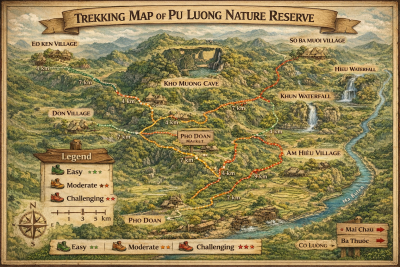
Map showing typical trekking routes and difficulty levels across Pu Luong Nature Reserve.
Easy Pu Luong Trekking Routes
Easy trekking routes in Pu Luong are perfect for travelers who want to experience the landscape without long climbs.
If you are unsure whether to choose easier rice terrace trekking or more rugged mountain terrain, this article comparing Pu Luong and Ha Giang trekking explains the key differences.
Typical routes include:
-
walking through Uoi Village rice terraces
-
visiting traditional Thai villages
-
exploring water wheels along small streams
-
short bamboo forest paths
Distance
3 – 5 km
Trekking time
2 – 3 hours
Elevation
Mostly flat with gentle slopes.
These routes are ideal for:
-
first-time hikers
-
photographers
-
slow travelers
-
families with children
👉 Many of these easy walking routes are included in our Pu Luong trekking packages, designed for travelers who prefer gentle exploration.

Village trails around Hieu Village offer easy trekking routes across rice terraces and traditional Thai villages.
Moderate Pu Luong Trekking Routes
These routes usually connect multiple villages and valleys.
Typical trekking routes may include:
-
Don Village → Uoi Village
-
Uoi Village → Lan Village
-
Ban Cong → water wheels trail
-
valley trails through rice terraces
Distance
6 – 12 km
Trekking time
4 – 6 hours
Elevation
Short climbs between valleys (100–300 meters).
You will experience:
-
bamboo forests
-
terraced rice fields
-
local farms
-
hidden villages
Many travelers describe this level as the perfect balance between adventure and comfort.
If you want to plan a multi-day journey, 👉 Recommended: Pu Luong Trekking 4 Days Or
👉 Hanoi to Pu Luong Tour

Moderate trekking routes often connect valleys and villages through bamboo forests and terraced fields.
Challenging Pu Luong Trekking Routes
Challenging trekking routes are designed for travelers who want longer exploration and deeper immersion into Pu Luong’s landscapes.
These routes often reach more remote villages inside the nature reserve.
Typical routes include:
-
Kho Muong village trekking
-
trekking to remote valleys
-
long ridge trails between mountains
Distance
12 – 18 km
Trekking time
6 – 8 hours
Terrain
-
steeper mountain paths
-
longer climbs
-
forest trails
However, even the most challenging treks in Pu Luong are still much easier than high mountain trekking in northern Vietnam.
This makes Pu Luong ideal for travelers seeking adventure without extreme altitude trekking.
For a full overview, read our Pu Luong trekking guide.
Difficulty can vary depending on weather and terrain, which is why trekking with local guides is often recommended.

More challenging trekking routes reach remote villages such as Kho Muong deep inside Pu Luong Nature Reserve.
Factors That Affect Trekking Difficulty
Several factors influence how difficult a Pu Luong trek feels.
Weather
During summer or rainy season, trails can become:
-
muddy
-
slippery
-
humid
The best trekking conditions are usually:
October – May.
You can check seasonal details here:
Trekking Distance
The longer the route, the more challenging the trek.
Typical itineraries include:
-
half-day trekking
-
full-day trekking
-
multi-day trekking journeys
Many travelers combine trekking with village stays.
Many travelers combine these trekking routes with multi-day journeys.
For example, you can explore our Pu Luong trekking 2 days itinerary for a short adventure or choose the Pu Luong trekking 3 days journey for deeper exploration inside the nature reserve.
Is Pu Luong trekking hard?
Pu Luong trekking is not considered difficult compared to other mountain trekking destinations in northern Vietnam. Most trails follow village paths, rice terraces, and valley routes with gentle elevation changes.
For travelers with average fitness, trekking in Pu Luong is comfortable and enjoyable, especially when walking with a local guide who can adjust the pace.
Fitness Level
Even moderate trekking can feel difficult if travelers:
-
are not used to walking
-
are traveling in hot weather
-
carry heavy backpacks
Most Pu Luong trekking tours include local guides who adjust the pace depending on guests.
Trekking with Local Guides in Pu Luong
Many trekking routes in Pu Luong are guided by local Thai guides who have lived in the valleys for generations. Their knowledge of the terrain, seasonal changes, and village culture helps travelers experience the region more deeply.
Unlike large commercial trekking destinations, many trails in Pu Luong are small village paths connecting rice terraces and valleys. Local guides understand these hidden routes and can adjust trekking pace depending on weather, trail conditions, and travelers’ fitness levels.
Guides also introduce travelers to local traditions such as:
-
rice farming on mountain terraces
-
bamboo water wheel irrigation systems
-
traditional weaving villages
-
daily life in Thai ethnic communities
This local knowledge transforms trekking in Pu Luong from a simple hike into a cultural journey through living landscapes.
Our Trekking Experience in Pu Luong
Our trekking routes are designed together with local guides who know the valleys, forests, and village trails of Pu Luong Nature Reserve. Over the years, many travelers have explored these routes to experience rice terraces, bamboo forests, and authentic village life in a slow and respectful way.
Each trekking journey focuses on nature, culture, and responsible travel, ensuring that visitors can explore Pu Luong while supporting local communities.
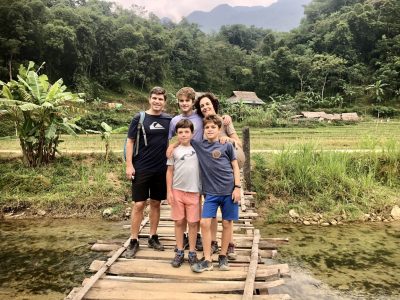
Walking with a local guide through quiet village paths
What Makes Pu Luong Trekking Unique
Unlike many trekking destinations, Pu Luong is not only about hiking.
It is a living cultural landscape where nature and village life exist together.
While trekking you may see:
-
farmers working in rice terraces
-
water wheels used for irrigation
-
traditional stilt houses
-
local weaving villages
This makes trekking in Pu Luong feel more like a cultural journey than a physical challenge.
Before choosing your trekking route, it’s important to understand whether Pu Luong is worth visiting for your travel expectations.

Trekking in Pu Luong often passes through Thai ethnic villages where traditional farming and weaving continue today.
Tips to Prepare for Pu Luong Trekking
Before starting a trek in Pu Luong, it is helpful to prepare a few basic items.
Recommended packing list:
-
comfortable trekking shoes
-
lightweight clothing
-
mosquito repellent
-
sunscreen
-
water bottle
Most guided trekking tours provide:
-
local guide
-
drinking water
-
lunch in local villages
✅ FAQ About Pu Luong Trekking Difficulty
Is Pu Luong trekking suitable for beginners?
Yes. Many trekking routes in Pu Luong are suitable for beginners with average fitness. Most trails follow rice terraces, village paths, and gentle valleys rather than steep mountain climbs.
How difficult is trekking in Pu Luong?
Trekking in Pu Luong is generally considered easy to moderate. The difficulty depends on distance, terrain, and weather conditions, but most travelers can complete the routes comfortably with a relaxed pace.
What is the best trekking level for first-time visitors?
Moderate trekking is usually the best option for first-time visitors. It offers a balance between scenic landscapes, cultural experiences, and manageable walking distances.
Are there steep climbs in Pu Luong trekking routes?
Some routes include short uphill and downhill sections, but most trekking experiences focus on gradual elevation changes through villages, forests, and rice fields.
Is trekking more difficult during the rainy season?
Yes. Trails can become muddy and slippery during the rainy season, which may increase difficulty. However, trekking is still possible with proper footwear and a slower pace.
Do I need prior trekking experience to visit Pu Luong?
No. Pu Luong is suitable for travelers without trekking experience. It is ideal for those looking for light to moderate walking combined with cultural and nature-based experiences.
👉 You can explore: What To Do In Pu Luong
Final Thoughts
Pu Luong trekking difficulty is best described as accessible adventure.
It offers enough challenge to feel rewarding, yet remains comfortable for travelers who prefer slow exploration rather than extreme hiking.
Walking through rice terraces, bamboo forests, and quiet valleys allows visitors to experience one of Vietnam’s most peaceful landscapes.
For travelers seeking authentic trekking routes in northern Vietnam, Pu Luong offers one of the most balanced and rewarding trekking experiences.
Overall, Pu Luong trekking difficulty is best described as moderate and accessible, offering the perfect balance between nature exploration and cultural discovery.
With scenic rice terraces, bamboo forests, and traditional Thai villages connected by walking trails, Pu Luong provides one of the most rewarding trekking experiences in northern Vietnam without the extreme challenges of high mountain trekking.
🔎 Related guides:
- 👉 Pu Luong trekking routes and trails
- 👉 Best time to visit Pu Luong
- 👉 Pu Luong weather guide
- 👉 Things to do in Pu Luong
🟡 Plan Your Trek with Local Experts
Looking for the perfect trekking route in Pu Luong?
We design private, slow-paced trekking journeys tailored to your fitness level and travel style.
👉 Explore:
Pu Luong Trekking – Local Travel Experts
Authentic local insights into Pu Luong Nature Reserve, including trekking routes, village experiences, and slow travel journeys in northern Vietnam.
Based on real local experience from guiding travelers in Pu Luong and continuously updated to reflect actual trekking conditions, village life, and seasonal changes in Pu Luong.